Showing posts with label Asian history. Show all posts

Wednesday, June 29, 2016

Train Reading - Shogun: William Adams, Ieyasu and the rise and fall of the Shogunate

One of my favourite books was James Clavell's Shogun. I say was because I haven't read it for many years. I must buy another copy. I suspect that I would still enjoy it.

I mention it now because yesterday I plucked another book that I hadn't read of the shelves for my train reading, Richard Storry's A History of Modern Japan (Pelican, 1960). There  I found reference to the remarkable story of William Adams, the real person on whom Clavell based his hero on Shogun.

I hadn't known that Clavell's English sailor John Blackthorne was based on a real person, nor what a remarkable life William Adams had had. I leave it to you to read the Wikipedia entry (link above) to see what I mean.

I chose to read Storry's book as a break from the constant swirl of current events. I knew a little of Japanese history, but had not expected it to be so interesting, nor to have so many resonances to current events.
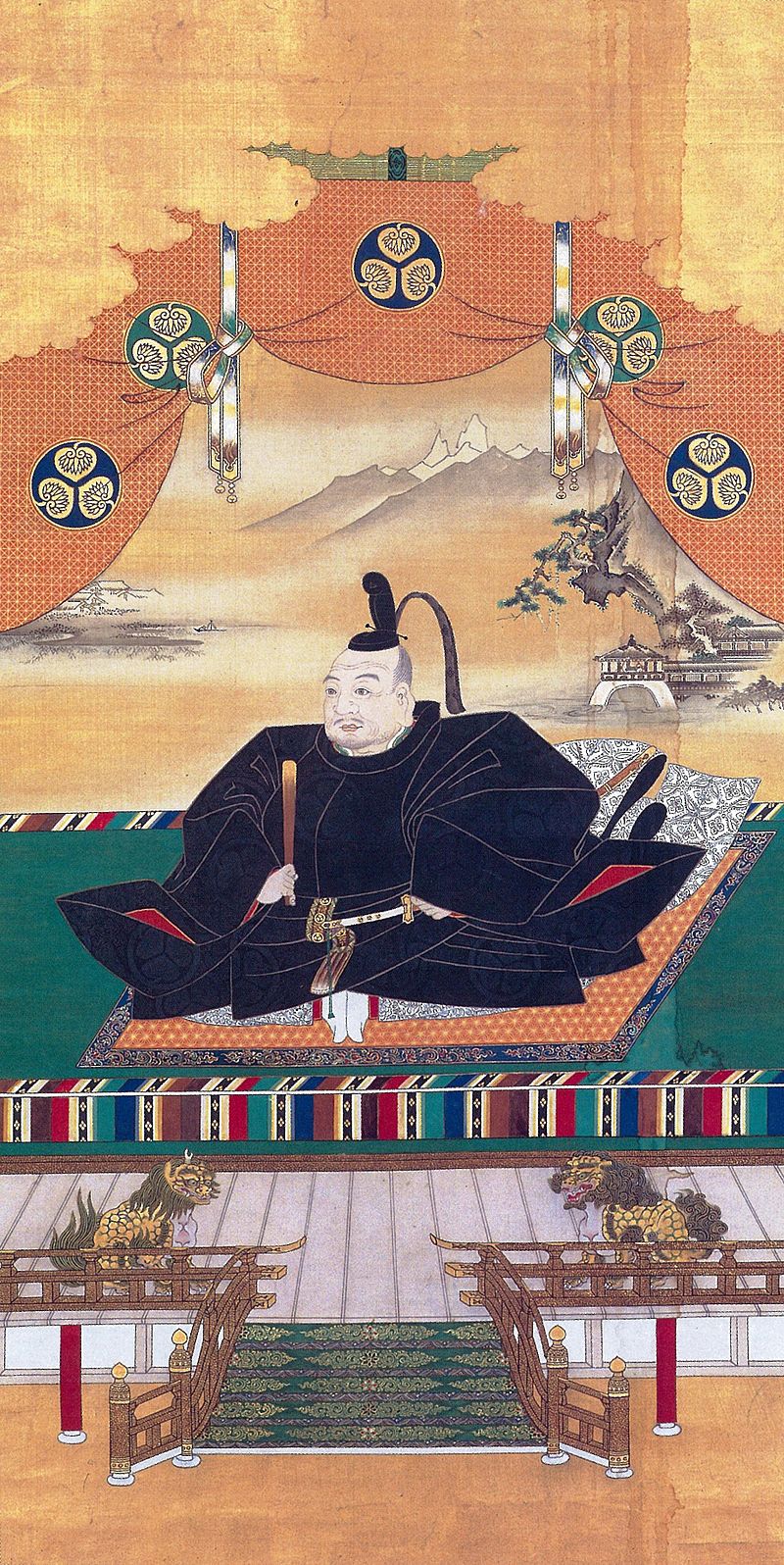
Shipwrecked in Japan, Adams became involved with Tokugawa Ieyasu, a figure of considerable power who founded the Tougawa Shogunate that controlled Japan until the forced reopening of the country to external influences by Commodore Mathew Perry and others.

In Shogun, Clavell presents Ieyasu (Toranaga) as the man who turned Japan inward to preserve culture and power from the encroaching Euopeans. That's not quite true. It is clear from Adam's story that Japanese external outreach continued. Indeed, Storry muses on what might have happened if Japan had continued open. Would there have been an earlier Japanese empire in Asia and the Pacific?

What is true is that the Tougawa Shogunate would turn inwards, largely it seems as a way of preserving its own power. The structures and culture created influence Japan to this day.

I said Commodore Perry and others forced the reopening of Japan. By the time Perry arrived in Japan in 1852, the Russian Empire was advancing in the North while the British were becoming the dominant Pacific maritime power. Indeed, Perry's visit was connected with the rivalry between the US and the British Empire and with the desire of some in the US to extend US influence across the Pacific. The only question in the Japanese case was the pattern of opening, for opening was inevitable.

The Shogunate fell in the shock of opening, with reform forces centered around the Japanese Imperial court triumphing. Japan turned to modernisation with a vengeance. The rest, as they say, is history.  

Monday, July 15, 2013

First Footprints and constitutional recognition for Australia's First Peoples

Tonight a short ramble.

First Footprints

Neil liked the ABC's First Footprints, First Footprints delivered!, as did I. The series traces the long Aboriginal occupation of this continent. There were things that annoyed me in that first episode, but my reaction was in part that they did a pretty good job, in part wondering at just how far our knowledge had come since I was a member of Australia's first Australian prehistory honours class all those years ago.

For those who are interested, you can watch the first episode free on download for the next few days - http://www.abc.net.au/iview/#/series/12680.

Constitutional Recognition of Australia's First Peoples

As it happened, almost straight after watching First Footprints on download, I listened to a an ABC Radio National program on the Australian constitution, including a discussion on recognition of Aboriginal peoples in the document. As it happens, this is something that I agree with, but as I listened I thought how hard it all was, 

One problem is that exponents feel the need to convince, rather than explain. A second problem is that if you wish to bring about change on an issue, discuss the issue. If you mix it in with other causes, and "popular" causes tend to run in teams, then you will fail.

A third problem is that people fail to recognise that our apparently pedestrian constitution is simply legal wrapping surrounding Australia's parliamentary system of Government.

I have absolutely no doubt that there will be some form of recognition of Australia's first peoples inserted in the constitution. However, I also suspect that it will take between three and ten years because time is required for issues to be argued through and for a community consensus to form.

Setting the Boundaries for Change

One of the really big problems with constitutional change is simply setting the boundaries of change, That is why there is really very little chance of a republic attracting a yes vote. There is no agreement on the bounds, on the definition of just what a republic might mean.

Aboriginal recognition in a preamble is really a different issue. People can agree to that. If, however, the intent were to alter some of the substantive provisions, then I think that any referendum is likely to fail.

Role of Parliament

In any case, I don't think that substantive provisions are required. In our system, Parliaments have the power within the defines set by the constitution. Most of the real demands for recognition of Aboriginal rights can be achieved through Parliament. If they can't get through there, they are highly unlikely to get through via constitutional change.

This doesn't make a new preamble just a piece of window dressing. Insertion in the constitution actually places a pressure on Parliament. It increases the chances of other things happening.  

Tuesday, September 23, 2008

China and the West - a note on the importance of dates in comparative history

There is a common view in China and the West that Chinese history is ancient compared to that of Europe. This is both true and false.

If we compare the broad sweep of Chinese history with that of Western Europe following the fall of Rome, then its true. However, if we compare China with the broad sweep of western history including the ancient world, then it is not.

I make this point because I was surprised at just how recent much Chinese history is. Recent is, of course, a relative term in itself. However, I thought it might be interesting and helpful in any posts on Chinese history to provide comparative material on the position in Europe at the time.

Friday, November 16, 2007

Taiwan, history and the meaning attached to words

Reading the newspaper, I found a small story about the refusal of the Chinese Government in Beijing to accept mail from Taiwan carrying a postmark supporting Taiwan's membership of the United Nations. I was struck by the careful wording of the story, the references to Taiwan as a "self ruled island."

That got me thinking about the way in which geo-politics affects language, not just the words used, but the overlay attached to the words. It also sent me off on a quite distracting web search into the history of Taiwan, distracting because I found all sorts of fascinating things that I had not known.

If we just look at language first, at the end of the Second World control over Taiwan or Formosa was returned from Japan to the Republic of China. So we had the Republic of China with Taiwan as a province. Then, with the success of the communist uprising on the mainland, we had two China's: the Republic of China with its headquarters in Taipei, the People's Republic of China with its capital in Peking.

Initially, the western world recognised the Republic of China as the continuing legitimate Chinese Government. Then from this we moved to two China's, China (Taipei) and China (Beijing). Then, more recently in popular usage, to Taiwan and China. Throughout all this, the carefully crafted language of diplomacy has changed as it tried to accommodate the two entities, including the power shifts between them.

The thing that gets lost in all this is that Taiwan has its own independent history, a history influenced by but distinct from that of China. Current developments between Taiwan and China reflect that history in a way that I had not properly recognised.

I do not have time to write about this this morning, but will put something down for interest a little later.