Showing posts with label Australian prehistory. Show all posts

Sunday, June 17, 2018

Tony Hughes-D'Aeth and Friday essay: Dark Emu and the blindness of Australian agriculture: a response

Dialogue Boxes, New England's Western Slopes Harry Pidgeon is one of a number of artists seeking to capture life and landscape in different parts of New England

My attention was drawn Tony Hughes-D'Aeth piece in The Conversation Friday essay: Dark Emu and the blindness of Australian agriculture by a tweet from  @billy_griffiths  "Nice piece by Tony Hughes-D'Aeth on the Australian environment as an actor rather than a stage".

I referred to Tony and his new book,  Like Nothing on this Earth: A Literary History of the Wheatbelt in a piece I wrote (Musing on Geraldine Doogue's new RN radio program on new genres in Australian history) back in March.

I had not yet read the book, I still have to do that, but based on the interview I liked his approach. I also liked the idea of Geraldine's radio series itself as described::
Saturday Extra brings you in the month of March emerging and established historians who are embarking on studies of particular regions in Australia and using different means to trace the history such as literature and the environment. Eminent historian Tom Griffiths provides his take on this new genre.
I wasn't convinced about the the new genres part, but was pleased to see a renewed interest in regional history as well as a focus on using different sources to explore different aspects of life. In a comment on the program website, I expressed the hope that there would be some New England material given the long intellectual tradition in that area. In the end there was not nor was there much really on regional history itself, although the segments were quite interesting.

Oxley Highway, Julia Griffin, another of the artists seeking to capture life and landscape in different parts of New England

Following Billy's tweet, I read Tony's Conversation piece  I tweeted back: "There is a danger of a new urban theology here, Billy. The discussion is much older and deeper than is allowed at least in Northern NSW, the area I focus on. Rolls was not an accident nor, for that matter, was Isabel (McBryde). They form part of a tradition."  I then sketched some history in a subsequent set of responses. Given my reaction to Geraldine's program, I was a bit miffed that  all the back history was still being ignored.

Reading Tony's article a little later, I realised that there was less history and far more theology than I had first thought, a view confirmed by the commentary stream. It is this element that I wish to address. I will bring up more detailed historical material in a post on my history blog.

Because I am about to be very critical, I repeat the link to Tony's piece so that you can check my arguments against his. I note that Australia is a varied place and that  that I am writing especially about an area that I know very well. Experience in other areas such as the WA wheat belt may be very different. I note, too, that I am not an urbanist. In Australian parlance, I am a townie with country links who has written on and shares at least some of the ethos of the various country movements, including opposition to metro dominance whether economic. political or cultural. All this will be clear to anyone who reads my blogs and other writing.

The Theology of  Tony Hughes-D'Aeth 
Herding sheep near Armidale when Australia still rode on the sheep's back. "it (agriculture) is as much religion as it is an industry" 
Tony adopts a religious tone early on. "What if Australia were to stop farming?" he asks. There would be a big economic hit. towns that are dying would collapse, jobs would go:
 But really the scandal of this thought goes beyond economics and into the very soul of the nation. The crucial insight to emerge from such a thought-experiment is that agriculture in Australia is a religion — it is as much a religion as it is an industry. 
Hughes-D'Aeth The powerful ideological connection between Australia and agriculture, Tony suggests,  is being increasingly and diversely scrutinised and comes to the fore in Charles Massy’s iconoclastic epic, Call of the Reed Warbler: A New Agriculture, A New Earth (2017. This throws into question 200 years of assumptions about what it means to graze animals in Australia.
Massy’s joins a spate of recent books that seek to recast the basic assumptions on which Australian agriculture was built. They include Don Watson’s The Bush (2016), Bruce Pascoe’s Dark Emu, Black Seeds: Agriculture or Accident? (2014) (which has recently been turned into dance by Bangarra) and Bill Gammage’s The Biggest Estate on Earth: How Aborigines Made Australia (2012). If agriculture is a religion in Australia, these writers are its heresiarchs. . .
The idea of the heresiarch, the founder of a heresy or the leader of a heretical sect, is deeply embedded in Tony's thought. I don't think it unfair to say that he see himself in this role.

He suggests that it is a "truism that Australia, overwhelmingly urban for most of its modern history, draws its identity disproportionately from “the land”" as evidenced in the Qantas ads.
 In this sense, Australia (the continent, the land, the soil, the bush) is imagined as a metaphysical substance which gives unity, meaning and destiny to what might otherwise seem like a collection of recently federated settler colonies, formed to extract resources for the benefit of a once powerful European nation state. The practice of agriculture is central to the belief that Australians as a people are expressive of Australia, the metaphysical ideal. Without this connection between agriculture and Australianness, we couldn’t make sense of such fashion icons as Akubra, Blundstone, Driza-Bone and R.M. Williams.. 
He goes on to state that serious questions about the way that Australia sustains people through the plants and animals that are husbanded on its ancient soils are not, of course, confined to the past several years.
The revision might be traced to Tim Flannery’s The Future Eaters (1994), or even earlier to such seminal works of environmental history as Eric Rolls’ A Million Wild Acres (1981), W.K. Hancock’s Discovering Monaro (1972), and Barbara York Main’s Between Wodjil and Tor (1967) and Twice Trodden Ground (1971).
What each of these writers did, Tony argues, was to make the Australian environment, or some part of it, an actor rather than a stage.Ffor these writers the environment  was not some broadly passive, albeit resistant, thing out there that needed to be overcome, battled, tamed, brought into submission — it was a dynamic system of interrelated parts, where every action had cascading consequences and complex repercussions.
At the centre of, or just beneath, all of these books is the attempt to try and locate some kind of basic environmental baseline. There seems to be no dispute about the fact that the agricultural colonisation of Australia by Europeans has had far reaching consequences for the organisation of the continent’s biota.
Tony then briefly discusses the adverse effects of agriculture in terms of species loss, the impact of hard-hooved animals, new predators and vegetation loss. He contrasts this with Aboriginal management of the land before returning to his theme: 
What all of these books are saying, and why they are in fact getting traction now, is that something is broken. These books are not announcing that the environment is broken — they merely mention this in passing, regarding this as beyond any reasonable doubt. Instead, what these books are announcing is that agriculture is broken. 
This, in the context of our self-image, is something that is much more terrifying and it will be savagely resisted. But each book is also hopeful in its way. None more than Charles Massy, whose book’s subtitle “A New Agriculture, A New Earth” is openly salvationist and The Call of the Reed Warbler is a detailed plan for the regeneration of degraded pastoral country that allows for both agricultural production and environmental recovery.
To Tony, all these books are an attempt to remedy current blindness. 

Response

In responding to Tony's article, I want to focus on adding a little historical depth rather than getting caught in the more theological or ideological elements.

The Aboriginal Period

Brewarrina Aboriginal Fish Traps. As the environment stabilised at the end of the Last Glacial Maximum and populations increased, the Aboriginal peoples invested in new structures and developed a sophisticated land management system  

In recent works, both Bruce Pascoe (Dark Emu) and Bill Gammage (The Biggest Estate on Earth: How Aborigines Made Australia) talk about Aboriginal land management. There are some problems with both books, but I don't think that anybody would challenge that the Aborigines had modified and managed their environment to meet their needs. They had also introduced Australia's first known feral pest, the dingo.

The fact that the Aboriginal peoples had sophisticated economic structures and modified their environment has been known for some time. Because memory is an imperfect beast, I went back and checked my 1966 UNE honours thesis on the economic structure of Aboriginal life in Northern NSW in the Nineteenth century. This was an ethnohistorical study attempting to analyse Aboriginal economic life at the time of European invasion.. Topics covered included the natural environment; population distribution; patterns of seasonal movement and the degree of settled life in terms of "Nomadic" society (the italics are in the original); division of labour, specialisation and and cooperation; property; trade contact and the distribution of goods; capital formation and industrial development; food production including farming and the extent to which the Aborigines were changing their environment.

While I'm quite proud that I did pick up issues that would later be important, some of my conclusions still stand, the thesis does have obvious weaknesses. However, it provides a snapshot of knowledge at the time.
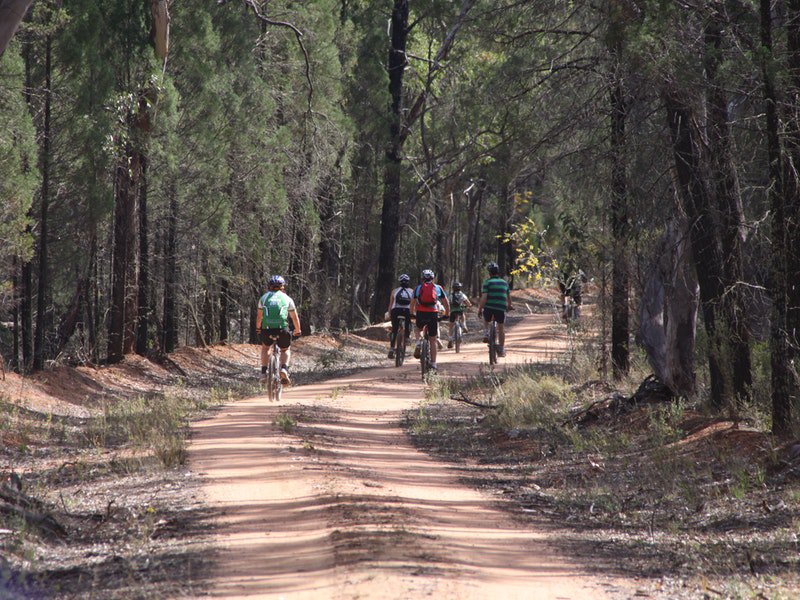
The Pilliga Scrub. As Eric Rolls describes, the forest now known as the Pilliga Scrub did not exist in Aboriginal times because burning kept the country open. 
In 1966, the extent to which the Aborigines modified their environment especially by use of fire was still open to some dispute, although the general use of fire was well documented. Looking at the evidence that was available that showed that fire had considerable impact and that by 1892 some previously open areas were being claimed by vegetation, I concluded that fire kept the country open and that non-fire resistant vegetation died out to some extent.

Since then, of course, so much additional knowledge has emerged. By the late sixties or early 1970s (I can't find the exact reference) the idea that the Aborigines deliberately burnt the Liverpool Plains, for example, to maximise productivity was being argued in the UNE Botany Department. Then we have Eric Roll's detailed 1981 study of the Pilliga. Since then, knowledge has continued to accumulate.

The difficulty that arises, though, is to know just what conclusion to draw from a comparison of now with the Aboriginal period recognising variety across the country including issues associated with the rolling date of European occupation. On the surface, for example, the creation of national parks intended to preserve the natural environment was in fact creating a new environment different from that which applied at the time of European occupation. This doesn't make them wrong, just indicates a need for care in drawing conclusions.

One recent development here has been the attempt to reintroduce traditional Aboriginal burning practices. A New England example can be found in the work being done by a UNE postgraduate student and the Bainbai people.

More broadly, if we assume that Aboriginal society in 1788 was at a point of balance with the environment they had created, and this is an assumption although its one I would broadly accept, then how should this actually inform the present?

The European Period

European occupation involved two broad types of environmental changes. One was the impact of the removal of  Aboriginal land management practices, the second the impact on the environment of European land management techniques. I really struggled in this area because I thought that Tony's arguments lacked historical context. The remarks that follow focus on the broader New England because that's the area I know. They are also partial because this is an area that I am still researching.  

Poet and environmentalist Judith Wright. He love of the land and support for environment causes was strongly influence by her her father P A Wright and her life on the family property Wallamumbi.
Tony starts his story in a sense with Tim Flannery's 1994 work The Future Eaters although he then cites earlier references going back as far as 1967. The story goes back much further than that and involves many more people. It's a long and complicated story that I can only roughly sketch.

By the 1920s, there was awareness in the broader New England of the affects of erosion and declining productivity. There was also interest in the application of science to agriculture. This led to initial attempts at conservation and soil improvement.  In his Mother's Country (1988), Maslyn Williams describes concerns and conservation efforts during the 1920s on the property outside Tenterfield where he was working as a young jackaroo.. They have a very current ring.

A number of people were involved in the attempts to improve land management practices. These included P A Wright, Judith's father, and Roy Vincent. In addition to his community and agricultural activities, Wright loved the Falls country east of Armidale and pushed for the creation of a national park to protect the area.The initial park, the New England  National Park, was gazetted in 1934. For his part, Vincent was responsible (among other things) for the creation of the NSW soil conservation service and for the creation of what is now the Dorrigo National Park.  .

In 1939, Wadham and Wood published a widely read book on land utilisation that that described (among other things) the interaction between agriculture and land degradation and fed into discussion. The year before, the campaign to establish a Northern university had achieved initial success with the establishment of the New England University College.

From the beginning, its proponents wanted the College to play an active role in agricultural research as part of its broader role. This was to take time, but they had more success in encouraging an interdisciplinary approach focused on the resolution of Northern problems. By the 1960s, NEUC/UNE had generated a considerable body of work across zoology, botany, geology, geography, soil science, history, agriculture and regional studies
Colonel Harold White, Bald Blair, one of the founders of organic agriculture in Australia
Another member of this New England group was.Colonel Harold White from Bald Blair Station. 

White experimented with the application of fertiliser to pastures. This gave great initial yields which then diminished despite increased application of fertiliser. White concluded that much farming was soil mining, that healthy food required healthy soil, that monoculture was part of the problem. To his mind, action to increase the humus content in soils was central to sustainable agriculture.

White began to experiment with various techniques that might increase the humus content. This focus on practical experimentation was one of the features of the New England group as a whole.

The term organic farming was coined by Lord Northbourne, appearing first in Northbourne’s manifesto on organic farming, Look to the Land, published in London in May 1940. The book reached Australia quite quickly, and was widely and favourably reviewed. White became actively involved in the formation  of the Australian Organic Farming and Gardening Society and was a prolific contributor to its journal. In 1953, he joined with Professor C Stanton Hicks to write and publish Life from the Soil setting out his ideas in some detail. The book was a considerable success, going through three editions. 

Another in this group was Don Shand, the founder of East West Airlines, who was involved in the development of aerial crops-dusting and of hybrid seeds. The first aerial aerial spreading of super in Australia took place at Walcha using a modified tiger moth.

Just from this brief sketch, you can see the spread of interests, as well as the desire to experiment. You can also see a divergence between some of White's views and say those of Don Shand.

 The combination of pasture improvement with fertiliser led to a dramatic increase in productivity, with carrying capacity increasing in some cases from one to three plus sheep equivalents per acre, something that was critical at a time of falling prices and rising costs. However, that plus previous  tree clearing contributed to the emergence of dieback in the 1970s, a problem that would emerge in other areas a little later. Again the result was a period of research and experimentation that led to new approaches.One result, for example, was the spread of Landcare groups, an organisation that had begun in Victoria in 1986.

More recently, the broader New England has been the battlefield for a number of environmental wars, this time focused especially on the conflict between agriculture and resource development from the Northern Rivers to the Mid North Coast up the Hunter Valley and onto the Liverpool Plains.

These are outside my immediate purpose for the purposes of this post. They form part of a later story that includes the further development of sustainable agriculture as well as fights over water. For the present, I simply wanted to provide a broader context to the arguments mounted by Tony in his article, placing the issues in a broader historical context focused on the area I know best.   

Thursday, January 14, 2016

The Sulawesi discoveries: where does Australian prehistory fit?

Really a random collection of things.

This painting, "Les Pin, Constantine,"  is by the Canadian artist Frank Milton Armington.(1876-1941). It goes up for auction on 25 January with a projected price range $US 25,000 - 35,000. I was curious because of the time and space overlap (Armington worked mainly in Paris) with the Australian impressionists. In a national sense, Canadian art is much more fragmentary than Australian reflecting questions about Canadian identity linked to Canada's very different history and greater complexity, as well as its proximity to the US.

 I was really interested in the latest archaeological discoveries on Sulawesi. There has been so much new work over the last decade or so that our perceptions of the history of the human race and of human prehistory have been transformed. I am just starting to get my mind round this. It's also changing the context of Aboriginal studies in ways that aren't clear to me, but seem to involve a diminution in its relative importance.

Globally, the quantum of work done has been steadily increasing, whereas in Australia budgets are constrained with archaeology now heavily dominated by rescue digs. Australia is a large country in geographic terms, so resources are thinly spread. Then, too, Australian prehistory is conflicted by the present in ways not found in many other places. You will get some feel for this if you look at the Australian archaeology entry in Wikipedia. I quote:
Archaeological studies or investigations of Aboriginal and Torres Strait Islander people and culture in Australia have had many different agendas through time. Initial archaeological investigation was often focused on finding the oldest sites. By the 1970s, archaeological research was concerned with the environment and the way it impacted on humans. In the late 1970s cultural heritage management gained prominence, with the increasing demands by Australian Aboriginal and Torres Strait Islander groups for representation in archaeological research. At a research level the focus shifted to cultural change of Australian Aboriginal and Torres Strait Islander people through time. 
Currently, archaeological research places great importance on Australian Aboriginal and Torres Strait Islander people's viewpoints on the land and history of Australia. Consideration is given to Australian Aboriginal and Torres Strait Islander people's belief that archaeological sites are not just capsules of the past but a continuation from the past to the present. Therefore, at a research level significance is placed on the past but also on the importance of the present.
I don't know that I quite agree with this history of Australian archaeological studies, but it draws out the inherent tensions involved. These tensions can be found in other places, but they are very pronounced in this country. The practical effect is the reduce the quantum of archaeological work.

When I visited the prehistory section of the Danish National Museum last year, I was staggered at the advances in knowledge that had occurred. I was also envious. They had created a story, a regional synthesis, of the type I was struggling to write for the area that I was studying.

I said earlier that all this was changing the context of Aboriginal studies in ways that weren't clear to me, but seemed to involve a diminution in its relative importance. I have outlined some of the problems as I have seen them. But now I want to stand back from those issues and look more broadly.

Putting things very simply, the work carried out by Australian archaeologists on Sulawesi suggest that tool using hominins were present there more than 60,000 years before the oldest date we presently have for occupation on the present Australian continent. They may have been a different hominin species,  but it's a staggering find. The issue now becomes how did the Aborigines fit into a pattern of regional and global hominin occupation stretching back far more millennia than anybody realised?

This is not a small question. I lack the scientific knowledge to attempt an answer, if indeed anybody can at the present time.I am merely observing. I would be reasonably sure however that the pace of discovery will continue to shake the very foundations of our view of the human past.

Postscript

Further to this story, John Hawks had a useful perspective piece, Somebody was on Sulawesi before 118,000 years ago, while the University of New England's Dr Mark Moore who analysed the stone tools recovered from the excavation, reports that the tools were finely crafted with a high degree of skill involved.

Sunday, September 15, 2013

Sunday snippets - crisis response to the GFC, the Australian party system with a dash of rising sea levels

Quite a gripping piece in the Sydney Morning Herald by Elizabeth Knight, 'They came with suitcases for cash': Westpac chief. The introduction follows. Its worth a browse. 

Westpac boss Gail Kelly has described scenes of customers arriving at bank branches with suitcases looking to withdraw their cash as the global financial crisis hit its nadir five years ago.

On the fifth anniversary of the collapse of US investment banking giant Lehman Brothers, Ms Kelly reveals the depth of Westpac's concerns, its crisis management and the extent of collaboration between the big four bank chiefs, government and the Reserve Bank.

I was in China that September as handbag at, of all things, an international conference of insolvency practitioners where my wife was a delegate. As the situation worsened, those attending started to leave, called back to their various home bases. Crises are good for the insolvency business.

I remember being surprised when I got back to Australia at the depth of local concern. It was that that really drew me back into writing on economics and the economy. Elizabeth's piece shows just how close Australia came to a real bank run. It also shows the strength of the Australian system.

Moving to current times, Don Aitkin has run two pieces (Is Labor the true dynamo of Australian politics? and Is Labor the true dynamo of Australian politics?) looking at the Australian party system over time. Like me, Don's formative roots actually lie in the country, the world of the Country Party. Like me, he grew to early adulthood in New England; by accident of alphabet, Don was the first student enrolled at the newly autonomous University of New England.

Although I disagreed with him on certain points, more as I came to know more, Don had a big impact on my thinking. In the seventies there was a flowering of books on the Australian country and country movements. This was work written from a non or even anti metro perspective, an exploration of ideas and politics outside the bounds set by Australia's big metro centres that generally, dominate Australian thought and politics.

I do wonder about Don's typology though, especially when it comes to the definition of conservative. It seems to me that that's shifted, that the old classifications may no longer be relevant.

Changing directions, over on Northern River geology, Rod Holland had a short piece on fluctuating sea levels on the North Coast, A history of unstable North Coast sea levels?. We saw a little of the importance of changing climate and sea levels in the ABC First Footprints series. Looking at layers in the coastal dunes revealed by erosion, Rod wondered about higher sea levels during the Holocene period:

According to Baker et al (2001a & 2001b) the last time the sea level was 1 metre higher than present was around 2400-1800 years ago. Maybe, the layer is a preserved berm from a beach that existed at the time of the Roman Empire (sometimes referred to as the Roman Warm Period). I don’t know for sure, but to my thinking it seems quite plausible.

I have a professional if still poorly informed interest in this type of thing because it affects the first part of the major history that I am trying to write. However, one doesn't have to be a believe or a sceptic in human induced climate change to understand that sea levels can vary. A return to the sea levels holding 2,000 years would indeed have quite a dramatic impact on the Australian coast line!

Thursday, January 06, 2011

Anthropology, the Aborigines & the need to tell a story

There has been something of a spat recently in the American Anthropological Association over directions. The proximate cause was the deletion of the word science from a long term plan. However, it appears to have re-ignited a divide within anthropology.

In an article reprinted in the Australian Financial Review from the New York Times, Nicholas Wade quotes Peter Perigrine, President of the Society for Anthropological Sciences. Perigrine apparently suggests that the what he sees as an attack on science comes from two influences in anthropology: one is the so-called critical anthropologists who see anthropology as an arm of colonialism that should be done away with; the second the postmodernist critique of the authority of science.

The debate also seems to reflect a division between those such as archaeologists for whom science is central and those concerned with "soft" subjects such as culture or gender who see their role more in terms of overcoming perceived social or moral ills and who often adopt overtly ideological positions. One flash point in the debate has been the use of anthropologists in Afghanistan to support the war effort.

Whether anthropology broadly defined can ever be a science is open to question. However, and like history, anthropologists can and to my mind should apply scientific methods.

The issues raised in the United States are on my mind at the moment because of a post I have been trying to write for New England's History on future directions in my research on New England's Aboriginal peoples. As I wrote, I felt my enthusiasm draining away.

At a purely personal level, I don't like fire-fights and am suspicious of those who adopt overtly ideological positions. At a purely personal level, I think that research integrity demands that you follow the evidence even where you dislike the conclusions. At a purely personal level, I have been burnt by those who dislike my research because it challenges their own pet views and ideological nostrums.

When I first became involved with Australian prehistory all those years ago, it was still a clean slate. There were no special positions beyond the purely academic. Yes, we all thought that it was important than we illumine the Aboriginal past. Yes, it was impossible to study the evidence without become somewhat partisan, pro-Aborigine. But there was still a joy in doing something new, in extending the knowledge boundaries.

Four years, ago my private research drew me back into Australian prehistory. I was a bit appalled at what I found.

Public archeology - research for the sake of illumining the past - had been replaced by private, contracted, archeology driven by current needs. At one level this was good in the sense that it supported many more archaeologists. At a second level, it introduced distortions into the discipline in terms of what was studied, how it was studied.

The what was determined by things such as heritage requirements. The how by the need for consultation, the need to take stakeholder needs into account, the time horizons associated with the study, the placement of restrictions on what should be studied. Beyond these limitations, there was a further problem: the material generated from the studies was less available, less useable. Australian prehistory had been effectively privatised.  

As I looked at the broader material, I found the same problems. Prehistorians such as John Mulvaney, a doyen of the profession, now had to devote time to the question of what could, what should, be studied and how. I don't know that Professor Mulvaney would agree with my interpretation, but that's the way I saw it,

These types of problems are not unique to Australian prehistory, but affect all aspects of the study of Aboriginal history.

Take, as an example, the work that I have been doing on New England's Aboriginal languages. Some would argue, indeed do argue, that each Aboriginal language belongs to a particular Aboriginal group and that, consequently, I should not be researching in this area without explicit approval of the relevant elders. But which elders?  Further, how can I maintain research integrity if my work has to be vetted in some way independent of the standard of that work?

This is a very real problem. In his extremely good PhD thesis on Tindale tribes, James Knight states quite explicitly that there were certain aspects of research that he did not pursue because his respondents stated that they did not want him to do so. Isn't this, in fact, censorship? 

The key problem with Aboriginal Australia is that past and present are inextricably entwined. Non Aboriginal guilt and Aboriginal responses play out in a complicated pattern of official, cultural, legal and  political responses that affect every aspect of research and writing.

It is now over forty four years since I did my original honours thesis on the economic structure of Aboriginal life in Northern NSW. When I moved back into the Aboriginal history I was astonished, but also a bit flattered, to find that my work was still alive and being cited all those years later. There are not many honours students who can say that!

Part of the reason for the survival of my work is political. The growth in Aboriginal heritage studies and in land rights' issues meant that my work maintained relevance. However, part of the reason lies in shifts in fashion; people focused on the evils done stopped writing about the Aborigines as Aborigines. As best I can work out, my work has never been updated, although specific aspects have. 

My Aboriginal mentee argues that I should continue my research and writing. I now know, she argues, more than most. Aboriginal people need access to their specific pasts.

Certainly I now know more than most. I don't think that I am being egotistical when I say this. Certainly, I know that there is a deep hunger among Aboriginal people for the type of material I write. Yet it remains hard.

I get so tired. I really don't want to have to steer between all the reefs of current conflicts. I just want to research and tell a story, to follow the evidence wherever it may take me.

This brings me back to my starting point, the fight in the American Anthropological Association. I really don't want to go down that route. I accept that there are substantive professional issues. But really, I just want to write!

Sources on the AAA spat

Thursday, July 22, 2010

Return to country

Back yesterday mid afternoon from delivering my paper last night in Armidale on An Exploration of New England's Aboriginal languages. I was as nervous as a kitten because of the likely audience, including members of the local Aboriginal community and linguists.

By accident, Jen (my Aboriginal mentee) was in Armidale on business, her first trip there, so we were able to have a review session over lunch and then I showed her a little of the city. She was actually surprised by the size of the visible Aboriginal presence in Armidale. Jen wanted to come to the evening session, so that guaranteed me one friendly face.

One of the distinctive things about Armidale lies in location; within a few days walk of the present city can be found no less than six distinct Aboriginal language groups.

Anaiwan or Nganyaywana was the local language. To the north, Anaiwan merged into the other main Tableland language group, the Ngarabal. To the east, the big coastal languages Gumbainggir (from the Clarence River down to and including the Nambucca Valley) and Dainggati (Macleay River Valley) came close to Armidale. In the far south, the Biripi or Gadhang (Hastings and Manning Valleys) adjoined Anaiwan. Then on the west, the very big Kamilaroi or Gamillaraay language group  ran the entire length of Anaiwan and then beyond.

The relationships between local Anaiwan speakers and the other groups was affected by just where you lived. While very little Anaiwan has survived, I think it clear that the dialects within Anaiwan were affected by the exact relationships with adjoining language groups. Armidale's modern Aboriginal community includes people who can trace their ancestry to all the main adjoining language groups; this can create some interesting tensions!

Welcome to Country was given by Steve Widders (Anaiwan) in part in Anaiwan. I am not sure that the wording was exactly the same, but this is an example from a Welcome to Country given by Steve at the University of New England.   

Yugga danya Ngawanya
(I am a Man of the Anaiwan people.)
Roonyahra tanya tampida Ngawanya
(This is the ancestral land of the Ngawanya.)
Ootila tanya yoonyarah
(I welcome you to this land.)

In his welcome, Steve recognised the other groups. Among those attending were Hazel Green who is, I think, the grand daughter of Frank Archibald (Gumbainggir), who was a leading Aboriginal elder in Armidale. Hazel had a magazine article on her family that I did not have time to read. However, you will find a little about Frank in this edition of Dawn.

Frank was born in 1885 and knew his grandfather who was born around 1808, significantly before the Europeans arrived. I think that he married a Dainggati woman from Walcha, so if I have the family tree right Hazel has ancestry from both.

Another who attended was Tom Briggs (Gumbainggir). Tom is the councillor for Northern NSW on the NSW Aboriginal Land Council and is the NSWALC Deputy Chair. He had been to a language course and had his course material with him, although again I did not have the time (I was also to nervous) to look.

Dianne Roberts, OAM, (Dainggati), the former Director and Principal Minimbah Aboriginal Pre- and Primary School also attended. When I was showing Jen a little of Armidale, we drove past the new school. It has around 67 pupils at present, a bit over 90% Aboriginal, but also with 5% international students. You will find a little of Dianne's remarkable life here.    

   Among the non-Aboriginal audience was Margaret Sharpe who, among other things, is a linguist who has written on Bundjalung, another of the Northern languages.

You can see why I was nervous, for as a non-linguist I was presenting on the story of Aboriginal languages across the broad New England to an audience including both linguists and and Aboriginal people with their own histories and family knowledge. In fact, both were kind. Indeed, Margaret has offered to help me with my pronunciation!

As I was researching the paper, I thought what a remarkable role the University of New England and its staff and students has played in researching, presenting and preserving the Aboriginal history and culture of Northern NSW. Writing in 1978 in the Introduction to Records of times past. Ethnohistorical essays on the culture and ecology of the New England tribes (Australian Institute of Aboriginal Studies, Canberra, 1978, p3).

Much of this historical material (settler records etc) is known only a the local level; its very preservation is a tribute to the devotion of local historians. Very little of it has been published. Searching out this elusive source material has been vital for the knowledge of this particular region. The detailed ethnohistorical  sources in Australia tend to belong to the periods and places of first contact ... Northern NSW was settled to late to share this historical record of detail, yet too early to be able to benefit from the beginnings of serious anthropological at the end of the century. The region was largely neglected in the anthropological literature of the late nineteenth century ... due partly to the complete, rapid, and early disintegration of Aboriginal culture after settlement in the region, partly perhaps to its isolation and its sense of separate identity from the intellectual life of the state's capital.

Had the University of New England not been founded, it seems likely that large slabs of the history of New England and especially that of the history and culture of its Aboriginal peoples including language would have been lost. The fact that we know so much now is one of the University's enduring legacies.  

I was eighteen when I went on my first archeological survey with Isabel McBryde. I was twenty-one when I wrote my honours thesis as part of Isabel's first prehistory honours group. I was thirty three when Records of Times Past was published, including a chapter based on my honours work. Now, many years later, there is a sense of enduring satisfaction that I am not only carrying the legacy forward, but also in so doing recording the work done by others.

There is also a sense of satisfaction that in so doing I am at least trying to give New England's Aboriginal peoples' greater access to their own past.

I suppose the thing that stands out to me here is not so much how much has been lost, but actually how much has been saved.

New England's Aboriginal history now stalks across my mind not as a series of abstracts, not as a series of disconnected facts, but as a flow, an increasingly connected story. While I am conscious of how little I know, I see the story as a flow of life against a landscape.

As a person and historian, I work at a personal level.

Back in January 2007, Malcolm Calley, Anthropology and Australia's Aborigines attracted interesting comments from a commenter who variously described herself as lefty or just c. I met c. in Armidale, she actually gave the vote of thanks!

In conversation, Caroline explained how she had put a Dainggati-English dictionary into her school library. The school has a lot of Dainggati kids. One boy commented that it was the best thing he had found in the library because it had words that he used!

I think that one of the best things that we can do for Aboriginal kids is to give them back their history. Not the generalised history you often see, but the actual specific local, regional and language group history.         

Saturday, March 14, 2009

Saturday Morning Musings- Australian prehistory

I have suggested before that it is a pity that current Australians do not seem to have full access to the long history of human occupation on this continent.

It is not known when the Australian Aborigines first arrived in Sahul, the name given to the broader land mass including Australia and New Guinea that existed during the Pleistocene period when sea levels were much lower than today. Based on current evidence, the best estimate seems to be 40,000 to 50,000 years ago, although it could be longer.

The question as to whether there was one or several waves of human settlement with later waves replacing earlier groups still seems to be open to question. Based on the discussion in John Mulvaney and Johan Kamminga's Prehistory of Australia, my gut judgement would be that the early arrivals quickly built up a population mass such that later arrivals probably melded in. I base this in part on difficulties of transportation; people probably came in small groups.

40,000 to 50,000 years is a very long time in human terms, long enough for the human occupants of the continent to experience major environmental changes.

At the time the first humans arrived in what would become Australia, sea levels were somewhere between 60 and 85 metres below current levels. Sea levels fluctuated considerably between 40,000 and 50,000 years ago, so the level depends upon the exact time the first small groups landed on what would become Australian shores.

Lower sea levels meant that Sahul was considerably larger than the modern continent. Neither Torres Strait nor Bass Strait existed. The northern shore line swept in a north easterly direction from well west of current Darwin up to modern New Guinea. The current Gulf of Carpentaria was well inland, with a large lake in the centre.

For those who love interactive maps, Monash University has a fun interactive map that allows you to look at the impact of past changes in sea levels on the continent.

If you look at the chart on the top of the map, you will see that 120,000 or so years ago sea levels peaked at around 3 metres higher than current levels. There was then a long downward trend, but with marked fluctuations around the trend. This meant while sea levels were falling, this fall was constantly interrupted by significant rises.

Around 30,000 years ago, the world entered a sudden cold snap that lasted at least 10,000 years. Note that all dates are approximate, plus or minus thousands of years. Sea levels dropped to perhaps 130 metres plus below current levels. Small glaciers emerged in Tasmania and on the Snowy Mountains.

Sea levels then began to rise slowly. Around 13,000 years ago there was a major surge; sea levels rose 25 metres in 1,000 years, 2.5 metres every century, 25 millimetres a year. At 10,000 years BP (Before Present), Mulvaney & Kamminga suggest that there was another surge as the Antarctic ice sheet fragmented. The Monash site suggests that 10,000 years ago sea levels at Sydney were perhaps two metres higher than now.

There are uncertainties and variations in all this that increase as we narrow our date focus. However, there appears to be agreement as to overall patterns.

The long history of human occupation of Australia, together with the continent's relative isolation, means that Australian prehistory provides a remarkable if still only partially understood story of the adaptation of people to environmental change.

Expressed in human terms, the changes would generally have appeared slow, taking place over generations.

This was not always the case. Mulvaney and Kamminga suggest that on the flat Great Australian Bight and Arafura Shelf between 13,000 to 11,000 years ago, the rate of marine transgression reached one metre a week, 110 kilometres in 2,000 years. Each high tide would have exceeded the previous one.

This would have had a major impact; ten years, 520 metres of territory gone; thirty years 1,560 metres gone; those living on the sea's edge would have had to move, triggering consequential effects.

As rising sea levels stabilised, the continent pushed back. Rivers deposited sediment, forming deltas. Dunes formed, linking higher land with lakes behind. The lakes filled with sediment, extending land areas. The coastline as we know it today came into existence.

As land extended, it was colonised by plants and animals. New, richer, ecosystems formed. People moved in, re-occupying previously lost areas.

Sea level changes were associated with changes in climate that are reflected in the archaeological record. I do not want to write about these in detail, I am not sure that I understand them yet, but I can illustrate with a few examples.

Along the Murray River, a high population environment because of the richness of the riverine resources, semi-arid land crept to within a few hundred metres of much of the river. The Murray Aborigines became isolated, mixing along the river. Clan boundaries shrank, life became more sedentary, more intensive. Analysis of human remains shows evidence of periodic malnutrition associated with dry times. There is also evidence of intestinal parasites.

In the high country of the Snow Mountains and the New England, very harsh country during the colder periods, people re-occupied the land around 2,000 years ago as the climate became warmer. Population numbers were not high, but the human presence returned.

We do not fully understand these changes. We never will. However, the evolving study of the Australian past has slowly pushed back barriers, bringing the long past back to the present.

I did my honours thesis - largely an ethnohistorical study - on the traditional structure of Aboriginal economic life in Northern NSW - in 1967. When I compare what was known then with Mulvaney and Kamminga's 1999 publication, a time period of only 22 years, I can see how far we have come. Yet so much remains to be done.

Unfortunately, the present affects the study of the past. I have to be very careful how I phrase this to avoid getting caught in the wrong arguments.

When I look at Australian prehistory I am struck by two things. I stand to be corrected on both.

The first is the way that the discipline has been, as I see it, twisted by current needs.

There has been a huge increase in archaeological studies, but this has been driven by things such as heritage or rescue studies commissioned to meet particular needs. The quantum devoted to study of our prehistoric past for the sake of knowledge has shrunk. This certainly holds in relative terms and may hold in absolute terms as well.

The second is the way in which study has been restricted by the need to take into account the views of particular indigenous groups. This is the really touchy one.

Take the study of human remains as an example. These provide invaluable evidence of the past. How much weight should be placed on the views of current Aborigines who may (but in some cases clearly may not) have some form of historical linkage to those remains?

The long history of human occupation of the Australian continent is, I think, a very interesting topic in its own right, as well as something directly relevant to all Australians. I wonder why so few Australians are interested?

Later

Neil had a useful comment on this post. He said:
It really is quite recent for Australian history books to go back any further than the first European navigators... That certainly was the history I learned in school.
Neil is right and it's all a matter of perspective. When Neil and I went to school the basic information wasn't there. That was why I found Australian prehistory so much fun at university - it was all new.

This no longer holds. The material is there.

A year or so back a book was published on Indigenous building and construction. It was reviewed more or less along the lines this is new, it shows that the Aborigines built things.

This was clear when I did my thesis in 1967, although I was surprised at the scale. Then I was entitled to be surprised. That is no longer true. There have been a number of books since including Prehistory of Australia that show this.

My question remains.