Showing posts with label train reading. Show all posts

Tuesday, May 19, 2020

Train Reading - Introducing John Buchan's Memory Hold-the-Door, Nevil Shute's Slide Rule


John Buchan, Memory Hold-the-Door
I fear that my reading has become sadly truncated. I blame covid-19, but in truth it happened much earlier. I suppose that it was associated with a broader ennui.

I have never, perhaps rarely, read individual books because I must. When told to do so, I find myself in rebellion, Sometimes, David Copperfield is an example, the book stays with me later. Mostly, they drift into the vacuum of my mind, there to be lost.

My train reading began because I had large bookcases of unread books on one side, a longish bus and train rde both ways on the other, The rules were simple: I had to select one book that I had not read, finish it whether or not I liked it, and then write a post.

The practice provided a liberal education because my remnant library is a meld of three generations, grandfather, father and mine with books over multiple ages.  I decided that I liked older styles of writing and that older views were not outdated simply by the passage of time and fashion. My knowledge of history also expanded because the older books ask different questions and have different assumptions. This applies to non-history texts as much as history texts.

With time, I started adding modern books that I thought that I should read. This was an error in some ways, diluting the original purpose.  I was no longer forced to address different ideas, some of which I profoundly disagreed  Then I stopped travelling. Drift set in because I was no longer travelling. I tried to create specific time blocks for my train reading, but found a curious thing. Train time had been dead time to be filled as I wished. Now I still had the time, but found that the thought that I should be doing something else productive kept intervening.

I know that this was silly, irrational. My train reading had been interesting, stimulating, valuable, but I couldn't help myself. I blame the whole thing on my protestant background!

A few weeks back I made a determined effort to begin again, plucking two books of my shelves to read in parallel. Both had been purchased from Boobooks here in Armidale. Each had cost the princely sum of $10. Both were autobiographies by prolific writers whose writing I had really enjoyed. Both dealt with the author's life outside writing, although the interconnections between their life experiences and their written work was clear.

The first book was John Buchan's Memory Hold-the-Door completed just before his death in 1940. Born in 1875Buchan was a prolific writer. publishing 100 works including nearly 30 novels, seven collections of short stories, and biographies of Sir Walter Scott, Caesar Augustus, and Oliver Cromwell. He was also a barrister, colonial administrator and diplomat, a member of parliament and, finally, a very successful Canadian Governor.

Memory Hold-the-Door focuses on aspects of Buchan's personal and public life, including his evolving beliefs. His writing is rarely mentioned. The book includes many vignettes, short biographies of his friends and colleagues, although he consciously chosen to exclude the living.   

Nevil Schute Norway to give him his full name, was born in 1899. As Nevil Schute Norway, he practised as an aeronautical engineer in the foundation days of aircraft production and civil aviation. As Nevil Schute, he published 23 books including On the Beach and A Town like Alice. He chose the shortened form of his name as a pen-name to avoid conflict with his aircraft and aviation activities.

As the name suggests, Slide Rule focuses on Shute's aviation experience. It's a rattling good yarn, to use a phrase both men would have appreciated.

I knew that many of Shute's earlier books had an aviation background including No Highway, Published in 1948, the book's hero is an eccentric boffin at RAE Farnborough who predicts metal fatigue in a new civil airliner but is not believed. Within four years, the de Havilland DH 106 Comet, the world's first commercial jet airliner, would experience metal fatigue related crashes, in so doing destroying the hopes of the British aircraft industry.

While I knew of Shute's background, I had no idea just how significant a figure he was in the early days of the aircraft industry as an engineer and businessman.

I will tell you a little more about these men and their autobiographies in later train reading posts.           


 .   


Wednesday, February 21, 2018

Train Reading - preliminary musings on Furtado's Histories of Nations

One of my Christmas presents was Peter Furtado (ed) Histories of Nations: how their identities were forged (Thames & Hudson, compact edition 2017). In the book, 28 historians and writers provide their own short perspectives (around 3,000 words) of the history of their own nations with a short introduction by Furtdado. The contributors were asked  “to step outside their usual frames of reference and write about how history is understood in the culture of their homelands at large,”

Jerry Brotton's 2012 review on the BBC's Historyextra provides a good overview of the book, concluding
Overall this is a collection that goes too far (why so many European nations?) and yet not far enough (why so few east Asian or African ones, why not every single nation?). The writing is not consistently good enough to make it more than an intriguing curiosity.
I can see why he reached that conclusion, the standard of writing does vary, but its also a little unfair. Even as an intriguing curiosity it's worth reading, but there is more to the book than that.

To begin with, the book reminds us of just how much the frames within which we think and write are determined by culture and history. As analysts or historians we do try to break out of this, but it's remarkably difficult because we cannot always see are own blinkers. It reminds us, too, about the fragility of national identities, about the way that history is put to the service of creating or preserving identity.

Some of the writers are very frank. On India, writer and journalist Mihir Bose suggests that India's problem is that it has never existed in an historical sense! It is "the civilization with no home-grown history". As I read this piece, I thought that it was a pity the Indian Empire broke up rather than transforming as it might have into a new nation. That, I thought, was one price of the Second World war.

As I read, I found that the multiple stories were causing subtle shifts in my own perceptions. I am reasonably well read, but there was material and perceptions that were new to me.

I could wish the book had more African material. Outside Egypt, Ghana is the only country covered on that continent, and Egypt's history is not African. I think that a similar book focused on the national history and historiography of African countries might provide some real insights - and correctives.

Overall, I thought that while the book is flawed, it is actually a very interesting work and well worth a read.


Saturday, November 04, 2017

Saturday Morning Musings - cleaning out my library

It is almost two months since my last report (Writing preoccupations - Vikings, History awards, Native Title, Roman villas and New England architecture) on my current reading and writing preoccupations. I thought that I should provide you with an update, recognising that my blogging continues to be a little irregular. I also thought that it might be a break from some of the current political preoccupations.

I have been cleaning out my books. Those books are the joy of my life as well as a key professional resource, but I am probably moving and cannot take them all with me. While my library is well down from its peak, I had the best part of 10,000 books, it is still very substantial in multiple bookcases and book boxes. Many of those books have been badly damaged in multiple moves, but they are still precious.

Have I read all those books? No, but that's also been part of the fun. Many of the books are older, some quite old, because they come from my father's and grandfather's libraries. There is a lot of fiction, but the collection is mainly non-fiction, a melange of authors and topics spread over two hundred years. Both topics and writing styles vary enormously, reflecting the interests and cultures at the time of publication. In some cases, I can take a single topic and compare attitudes and writing at multiple points in time over time.

My train reading series of posts began because I was picking books from my shelves at random that I had not read and then making myself finish them, The finishing part was important. I had to do that even when I disagreed with the ideas or found the writing boring because it was part of the game. The result was something of an education, an increase in tolerance, an understanding of difference.

In my current book sort, I have been putting books in piles for possible throw-out. One was Wing Commander Asher Lee's Blitz on Britain, a second Oluf Reed-Olsen's Two Eggs on My Plate.

Blitz on Britain (Four Square paperback, 1960) was published to coincide with the telemovie of the same name. The photo shows pilots running to their plans.

I almost put this book into the bin without re-reading, but then thought that I should read it. I am glad I did. Asher Lee know his stuff!

 The tone of the book is reasonably unsentimental. The writer's sentiments are clear, but the dedication shows that he could stand aside from some of the emotion that surrounds the events of the time.
This book is dedicated to the pilots of both air forces, those of the German Air Force and those of the Royal Air Force. On different days and in different ways they fought against odds with skill, courage and devotion.  
I found the book interesting Lee is able to show events in context on both sides of the Channel. He includes statistical data on things like relative aircraft production. Perhaps the most unexpected message is that the Battle of Britain was by no means the uneven fight, a triumph against overwhelming odds, as conventionally presented.

On the German side, the Germans had to bring their air force up to newly created bases in occupied territory to allow sustained attacks on Britain. This took time. The Luftwaffe was also involved on several fronts, making it more difficult to concentrate resources, a difficulty compounded by strategic confusions. The total number of German planes was substantial, but these were spread across multiple types meaning that the number of a particular type was limited.

The feared Stuka Dive bomber with its iconic siren was used to effect early in the war but suffered from a major weakness, its slow speed compared to fighters. It was used over Britain, but high losses meant that it had to be defended by fighters. This lead to its withdrawal from service in that theatre, reducing the number of available German planes.

On the British side, British military aircraft production had been increasing to the point that it was matching German production. The British also developed air defence systems that allowed them to track in-coming German planes. The big initial problem was shortage of trained pilots. Planes could be replaced, experienced pilots were in short supply.

Here Lee makes a very interesting point about the German experience. The Luftwaffe began with a larger solid cadre of experienced pilots. As the war proceeded, accumulating pilot losses began to degrade the Luftwaffe's offensive capacity quite quickly.

I put Lee's book in the bin.  I was glad that I had read it, but could always borrow it.            

Oluf Reed-Olsen's Two Eggs on My Plate is a more personal story, a story of a Norwegian resistance fighter during the Second World War. The title comes from the habit of giving people who where about to go on mission from England into occupied Europe two eggs on their plate at the final meal. Eggs were in short supply, so this was seen as a signal and reward.

I had read this book many times, but many years before. I read it again with enjoyment (it's a boys own style yarn) and then put it in the bin.

Reading both books reminded me of two things in particular. The first was the passage of time.

I grew up in an era when the Second World War was very close. War stories were common and popular. Now the war has receded into history and become the subject of nostalgia pieces such as ITV's Home FiresFoyle's War and The Halcyon. Perhaps nostalgia is the wrong word, but you know what I mean,

There is something a little odd in the way that so many of the decades from the forties on have progressively become the subject of nostalgia. Nostalgia for particular periods is not new, but we do seem to make a welter of it today. Is it just because populations are aging in many countries, creating a desire to reach back?

The second thing thing was the extent and nature of changing sensibilities. I chose that now old fashioned word quite deliberately. It has two almost contrasted meanings. One is the quality of being able to appreciate and respond to complex emotional or aesthetic influences; sensitivity. The second encapsulated in that Jane Austen title Sense and Sensibility is a quality of delicate sensitivity that makes one liable to be offended or shocked..

Each generation has its own sensibilities using both meanings.Each generation assumes that its sensibilities are correct, an assumption challenged by subsequent social and cultural changes. The current age is one of high and complex sensibilities with an especial focus on the second meaning. There are just so many things that offend or shock us. .
       
My type of reading forces me to confront differing sensibilities. The sensibilities displayed by Asher Lee or Oluf Reed-Olsen are familiar, if different from today's. J L Myres' The Dawn of History is a little different.

The book was first published in 1911 and proved very popular. My copy, a Home University Library edition from 1933, is the tenth reprint. The first page shows it was a second hand book originally owned by M Broadhurst  and sold for 1/6. The writing on the first page in my father's hand says J Belshaw, NEUC (New England University College), Armidale NSW Sept 38.  So it was purchased by my father in his first year in Armidale and just one year before the Second World War broke out.

I had not heard of J L Myres and therefore had to look him up.

Wikipedia records that Sir John Linton Myres (1969-1954) was a British archaeologist who conducted excavations in Cyprus in 1904. In 1910 he became the first Wykeham Professor of Ancient History at the University of Oxford, having been Gladstone Professor of Greek and Lecturer in Ancient Geography, University of Liverpool from 1907. At Oxford, he highly influenced the British-Australian archaeologist Vere Gordon Childe.  In addition to his academic writings, he contributed to the British Naval Intelligence Division Geographical Handbook Series that was published during the Second World War.

I almost gave this book up in Chapter One. "We have only to glance at a globe or a general map", Myres wrote, "to realise that as matter of fact almost all historians have confined their attention to a few quite small regions of the world "  Very large areas have little or not historical literature. The reason for this, Myres suggests, "is obvious; there is little or nothing there in the way of human achievement for the historian to write about." Myres then presents a stylised version of cultural types - hunter gatherer, pastoral and agricultural/industrial; civilisation begins, history dawns, with the last beginning in the Middle East. Myres is a geographical determinism and a believer in the big man school of history. He also uses racial descriptors.    

Most current readers would have put the book aside at this point as I was tempted to do. I still use the now old fashioned term prehistory to distinguish between history based primarily on written records and that based primarily on other sources where written records are not available, but this is a methodological distinction.

In my own writing on the history of New England, the first part of the draft book deals with Aboriginal New England up to 1788. In evidence terms, this relies particularly on archaeological evidence supplemented by the ethnographic record. In my mind, this is just as much history as later sections. However,  in writing, I do use the term prehistory at spots where it has particular relevance to the previous study of New England history.    

I digress. I think that part of the reason I objected so strongly to some of Professor Myres' early remarks is that simplistic models of human society are still around and deeply embedded, including especially ideas about the "primitive' nature of hunter gather societies  Like Childe and indeed me, Myres is a synthesizer and model builder. This aids interpretation and the asking of new questions, but in the end new evidence makes fools of us all.

Take this review by  Kambiz Kamrani in Anthropology,net, Adam Rutherford’s A Brief History of Everyone Who Ever Lived.  In 2009 the first DNA was extracted from the bone of a Neanderthal, In the eight years since, everything we thought we knew about the human past has been turned on ts head. A line has been drawn in fire though multiple compendiums of human thought and belief.

I kept reading because I had to, my rules required it, and in the end was glad that I did. This was partly because my reactions reflected my own sensibilities. Take the racial categorisations. So far at least, they appear to be used as descriptors that reflect prevailing views, but without any overlays of superiority or inferiority. More importantly, Myles' focus on geography and on relationships between groups is in some ways quite modern and creates clear pictures that I found interesting and helpful.

I will reread earlier sections of the book because I am interested in changing thought patterns. However, I want to look again at the way he approaches geography  I am not a geographic or environmental determinist. However, geography is important, and I have been wrestling with the question of the best way of bringing it alive, of integrating it into the narrative in a way that makes it part of the story for readers who know nothing about the area I am writing about. Given all this, I have added the book to the keep pile, at least for the moment.  .  
    

Sunday, August 21, 2016

Sunday Essay - reflections on culture, society and early Australian history

When I first read A C V Melbourne's Early Constitutional Development in Australia (First published 1934. My copy edited by R B Joyce, University of Queensland Press, St Lucia, 1963), I thought that it was as dull as bat shit. Yes, I am sure that there are specialists in bat shit who find the substance quite fascinating, but you know what I mean!

The difference now is that I know just so much more. The names and events are familiar, that certainly helps, but I also have patterns in my mind that are deepened or sometimes challenged by the new material I read. No doubt you will hear more of Melbourne, but tonight I want to use it as an entry point to another discussion, the importance of culture. Not "high" culture, but culture in the sense of patterns and dynamics in society.

I'm not sure when I first became interested in culture. Growing up in Armidale sensitized you very quickly to social structures. Armidale and the surrounding district had at least six quite distinctive social groups that mixed and overlapped in complex ways.

You had the basic divisions of town, gown and country. But they were subdivided in turn. In country, you had the division between farmer and grazier. Gown was the academics, but you also had the large number of non-academic staff who were not gown, formed part of town, but were also distinct. In town, you had social and economic divides linked to what people did, to their education and social status. Some of the wealthier merchants or professionals, for example, interlinked with the grazing community or with gown.

Religion and politics sat as a layer over all this. Where you went to church or to school reflected, affected, the groups that you belonged to. There were considerable sectarian divides, not just Roman Catholic versus protestant, but within the protestant churches themselves. Then there was another layer linked to community activism. There is almost a universal truth in smaller communities where cooperation is central to the maintenance of the fabric of life that involvement brings acceptance and recognition that crosses divides. The CWA (Country Women's Association) is a good example.

I straddled divisions, but was obviously very aware of them since I had to navigate my way through. It gave me a good understanding of social analysis.

The first academic sociology work that I can remember reading, I was still at school, was a book I plucked from my father's shelves. It was, I think by an American sociologist called Harrison White. I think that it was White. It certainly sounds like him. According to the Wikipedia piece linked above, White emphasised the importance of networks and social interaction in the formation and working of culture.

The book in question included the story of two new American suburbs founded about the same time drawing from similar demographics. The residents in one formed bonds, welcoming new comers, creating a positive culture. The residents in the second, partly because of urban design failures, became fragmented, isolated, creating a very different culture. Decades later, the first suburb had grown in cohesion, prestige and wealth, the second suffered from problems of crime and social disunity and was in economic and social decline, slipping into social decay.

New South Wales began as a penal colony. It was partly, in fact, a large scale penal reform experiment and one that proved to be a considerable success. The institutions and cultures that we know today formed during the earlier colonial period. Some were not so good, certain aspects of the Rum Corp come to mind, but others were. The sheer exigencies of running an open penal colony created a higher degree of local freedom, greater possibilities of  advancement, than was the case in the United Kingdom. The strong executive power exercised by the earlier governors may have been necessary just because it was a penal colony, but it also acted to check the power of emerging wealth and status based on the civil and military officialdom.

Add caption
Early politics in the colony centred on two emerging groups, the emancipists or ex-convicts and the exclusives, the civil and military officials who had built their own private wealth largely from their official positions.

Initially the exclusives lead by people like John (image) and James Macarthur had power and especially the access to London provided by their wealth. They were active in promoting their interests including their access to land. But the emancipists were also becoming wealthy and, with time, proved reasonably capable lobbyists with both sides using employed agents within the House of Commons.

In the beginning, there were few free settlers in the new colony. As early as 1792 Governor Phillip, anxious about the food supply, had asked for some free settlers. The first group arrived on the Bellona on 6 January 1793 attracted by inducements that included a free passage, grants of land, tools and implements from the public stores and the services of assigned convicts, fed by the Government for two years and clothed for one.

The number of free settlers increased slowly from that point, but by the time Governor Macquarie arrived in 1810 there were perhaps still only 1,000 as compared to 1,700 officials in the civil and military departments and perhaps 5,000 convicts. There were also some 2,500 children.

Macquarie did not favour free settlement. He saw NSW as a place of redemption where offenders might re-establish their place in society. He did not mind men with capital who might establish themselves in agriculture, but was vehemently opposed to those with connections who expected to acquire wealth from the exploitation of Government privilege. This made him a natural target for the exclusives who campaigned against him in London.

The exclusives gained their name from the way they excluded people, even most free settlers, from their society. They had position and wished to protect it. In so doing, they created a bond between the ex-convicts who were achieving success and free settlers, between merchants and artisans who might otherwise have been drawn to the order and social hierarchy the exclusives represented. This gave the emancipists added numbers and, in time, influence.

The political divide between exclusive and emancipist was inherently unstable because it was based on social class, on concepts of order and status, in a rapidly evolving colony. The accumulation of wealth by the emancipists, ex-convict and free, could not be ignored. The tipping point came with the pastoral expansion.

On their estates on the outskirts of Sydney and in the Hunter, exclusives were attempting to recreate the social order of a home country that was itself undergoing fundamental change. They had a vision of broad estates farmed by tenant farmers, of country houses and an ordered country side. Their wealth was based on land acquired by grant and purchase, on farming and the sale of farm produce.

The explosion of settlement outside the boundaries of settlement – the nineteen counties - imposed by Governors concerned about the management of a penal colony changed everything. Initially the squatting rush was opposed by many exclusives. It threatened the value of their estates within the settled areas, it threatened their life style and position, but they soon joined in. There was money to be made.

One product, wool, was central to the rush. It was a high value product that could bear the very high shipping costs associated with slow land transport. But once the pastoral expansion began, other factors came into play. The pastoral rush created a demand for horses, for sheep, for cattle, to stock the new properties.

Beyond the frontier, land had no direct value because there was no ownership. The value lay in the value of the increasing stock of animals, of the returns that might be gained from those animals. The wool clip provided an external source of income that underpinned the whole process, but it was the animals that were important. You didn’t have to sell your stock to the final point of sale such as the abattoir, you could sell them to the squatters moving to the next point of occupation who needed stock to do so.

The end result was a long boom that finally culminated in the crash of the early 1840s. Both exclusives and emancipists participated in this rush. In so doing, the old divisions disappeared, new ones emerged.  

Sunday, August 14, 2016

Reflections on Richard Neville's Play Power 1

In my train reading, I have finally finished Richard Neville's Play Power (Jonathon Cape, London 1970).  In the end, it left me curiously dissatisfied.
What's it all about, Alfie
Is it just for the moment we live
(1966)
As an historical period piece, I think that it's very good. It describes the various threads in the counter-culture movement as they existed in the last years of the 1960s, including the conflict between those who were politically inspired and those following a different hippy drum. It provides a snapshot of the underground press at the time, a press at the height of its influence and popularity. It captures the life of those who tuned in and dropped out, who joined the hippy trails, some never to return.

At the time of writing, Neville believed that a revolution was underway:
For while the Establishment, with its flair for survival, can ultimately absorb policies, no matter how radical or anarchistic ………, how long can it withstand the impact of an alien culture? – a culture that is destined to create a new type of man (pp 66-67). 
Note the use of the word man. The counter culture is sometimes credited with contributing to the rise of feminism. Reading the book, I can't see that. At least as Neville describes what he calls the Movement, it is totally male-centric. All the main figures are male. The trends that led to feminism, are much older. Freidan's the Feminine Mystique, a seminal work in the modern feminist movement, was published in 1963, predating the rise of the Movement. That rise was coming, but not there yet.

In Neville's world, I accept that this may be unfair, women were there to be screwed, especially while stoned. Neville writes (p 67):

Meanwhile, into the world, children are being born like they never have before. ‘We want our son the be free, unprogrammed and completely unidentified with the state’, says one child’s young father who delivered the baby himself…That means no birth certificate, no schooling unless the child wants it, no taxation, no official record of his existence. These children will be tranquilised by hash, lullabied by rock and roll, educated by the community. And if one of them is ever discovered by the bureaucracy? ‘He will tell them he’s from another planet,’ advises one father.

I found this deeply troubling at several levels. One was the absence of any reference to the mother, it's all he. A second is the deep naivety of the concept.

At the time that Neville was writing, it was still possible to follow the hippy route overland from India to England. Of course, it wasn't just hippies. Aunt Helen, always adventurous, went on that trip. It was still possible to dream of Marakesh or dropping out on the beaches of Goa. It was still possible to dream of acquiring a cheap block and doing what you want.

Richard Neville can not be blamed for failing to recognise that the future lay not with his Movement but with George Orwell, an emerging gray society in which every person has a number, in which freedom reigns but only within narrowing defined bounds, in which turn on, tune in, drop out would become a social ill that needs to be addressed with all the social instruments available to computer empowered governments driven by key performance indicators.

Richard Neville could not have realise, although perhaps he should have, that his revolution would end in a war on drugs that would place an increasing proportion of the population of at least some western countries in jail, that would lead to the execution of others in counties that were once on the hippy trail.

I said perhaps he should have. His book is full of stories on increasing government restrictions from destination countries, of local reactions to what came to be seen as interlopers breaching local customs.

Neville has no time for this. The Movement will sweep forward. For my part, I am left with the impression of a group of self-indulgent young from certain wealthy countries who believed that their needs, perceptions and values should over-ride everything else

I will complete this story in a later post..

Thursday, July 14, 2016

Japan, China and the lessons of the past

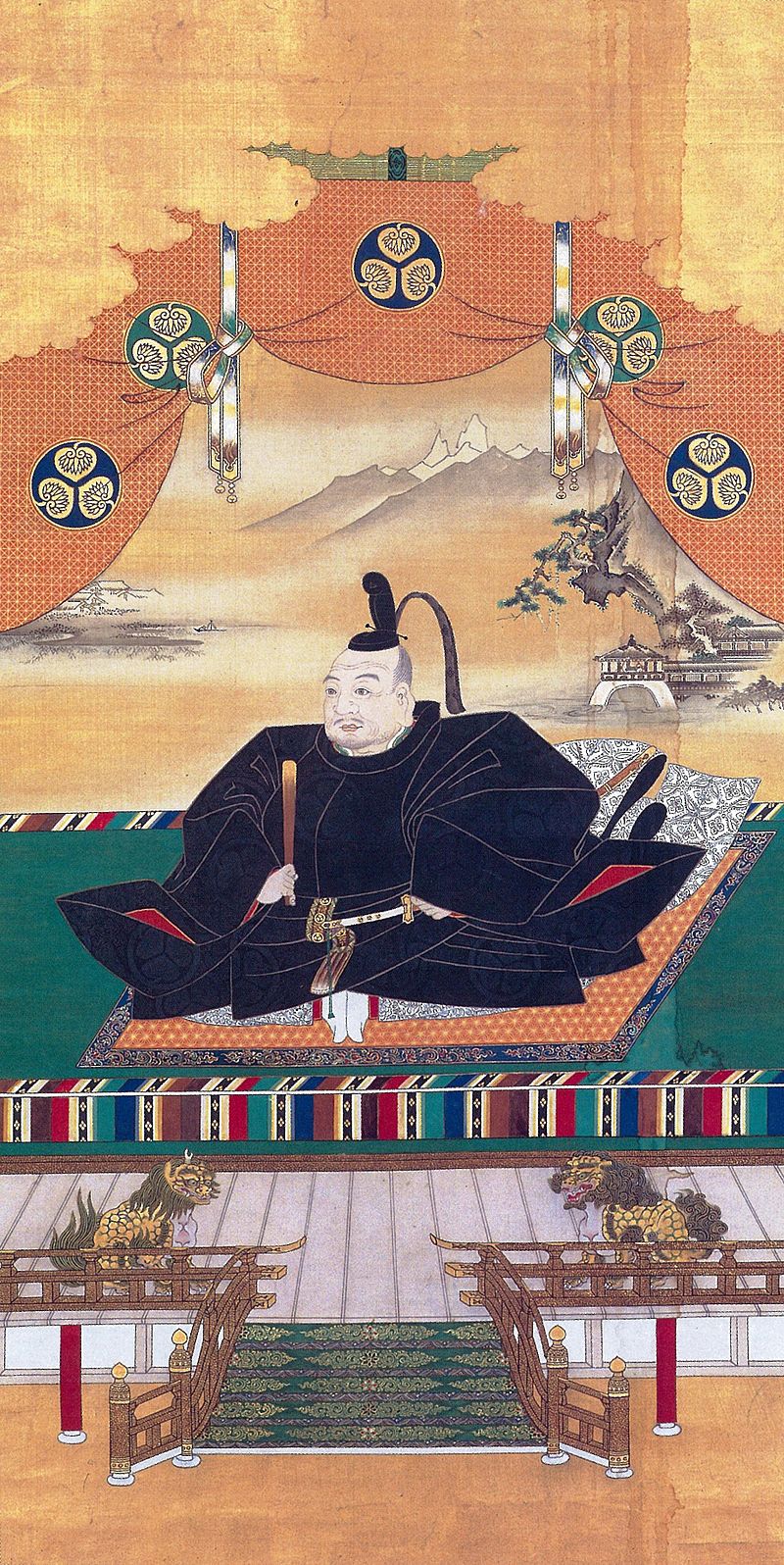
In a post on 29 June 2016, Train Reading - Shogun: William Adams, Ieyasu and the rise and fall of the Shogunate, I mentioned that my present train reading was Richard Storry's A History of Modern Japan (Pelican, 1960).

The Shogunate was followed by the Meiji era (1868-1912) during which Japan moved from a feudal form towards a modern industrial society. In a comment on my earlier post, Thomas wrote:
History indeed! I just this week finished our year 11 Modern History topic on this. The students always find it fascinating at the rapidity of Japanese modernisation under Meiji - some 300 years completed in 30! The struggle for power (both in Asia and within the internal structures of Japan) that follows is equally fascinating.
Thomas is right. As I followed Japan's history up the Second World and beyond, I felt a certain resonance with current events.

Croesus, King of Lydia, has come down to us today in two phrases. One is as rich as Croesus, for he was a very wealthy ruler. The second is the most famous phrase ever to come from the Oracle at Delphi. Croesus was considering war against Cyrus the Great of Persia. Seeking advice from the Oracle, he was told that if he attacked the Persians, he would destroy a great empire. He did and he did - his own.

Now Croesus was actually a fairly cautious person who seems capable of considerable planning. It's just that he interpreted the Oracle in the way that would support what he wanted to do. He also demonstrates that once you start a war, you can never be absolutely sure if the results. 

Today, intelligence advice has come to fulfil something of the same role once performed by the Oracle. It seems clear, I think, from the Chilcot Report that the intelligence advice on Sadam Hussein and his weapons was treated uncritically, interpreted in the context of an already established mindset. It also seems clear that if, as seemed inevitable, the allies won the ground war nobody really focused on the question of what might come next.

If you had told the younger radical Japanese army officers who engineered the Mukden Incident, an incident that helped lay the basis for the Second World War in the Pacific, that the empire that they would destroy would be their own, they would have been incredulous. Such thoughts could not penetrate the bubble that had been formed.

The modernised Japanese state that emerged from the Meiji era was unbalanced with representative institutions crafted onto culture, clan structures and attitudes formed during the Shogunate. Within that system, the Army acquired institutionalised powers and position that effectively made it a world in itself. 

The Navy provided some counterbalance, as did the continued presence of the older oligarchs who had played such a role in the modernisation and who continued to exercise influence. Yet the growth in the power of the Army, the radicalisation of the younger officer corp, the willingness in the broader society to use force to achieve individual ends, combined to create a climate that in the end overrode everything else and placed Japan on the path to disaster. 

Today, the Japanese story bears an uncomfortable resemblance to the unfolding drama in the South China Sea. The genesis of the modern dispute can, at least in part, be traced back to the great humiliation placed upon China by the empires including that republican empire, the United States. The Japanese Empire was late to the fray, but then became an active participant and, in the end, the most active participant with the aim of the dismemberment of China. 

Arguably of more importance is the the way in which modernising China's governing structures resemble those of Japan in that the modern Chinese state is really an amalgam of competing fiefdoms in which the military has come to play a very important role. We usually focus on the Party, but power in the Party rests on control of the instruments of state that in turn exercise their own influence.

It is a somewhat uncomfortable thought that, as happened with Japan, the internal power dynamics within the Chinese system may end in broader conflict.   


Wednesday, June 29, 2016

Train Reading - Shogun: William Adams, Ieyasu and the rise and fall of the Shogunate

One of my favourite books was James Clavell's Shogun. I say was because I haven't read it for many years. I must buy another copy. I suspect that I would still enjoy it.

I mention it now because yesterday I plucked another book that I hadn't read of the shelves for my train reading, Richard Storry's A History of Modern Japan (Pelican, 1960). There  I found reference to the remarkable story of William Adams, the real person on whom Clavell based his hero on Shogun.

I hadn't known that Clavell's English sailor John Blackthorne was based on a real person, nor what a remarkable life William Adams had had. I leave it to you to read the Wikipedia entry (link above) to see what I mean.

I chose to read Storry's book as a break from the constant swirl of current events. I knew a little of Japanese history, but had not expected it to be so interesting, nor to have so many resonances to current events.

Shipwrecked in Japan, Adams became involved with Tokugawa Ieyasu, a figure of considerable power who founded the Tougawa Shogunate that controlled Japan until the forced reopening of the country to external influences by Commodore Mathew Perry and others.

In Shogun, Clavell presents Ieyasu (Toranaga) as the man who turned Japan inward to preserve culture and power from the encroaching Euopeans. That's not quite true. It is clear from Adam's story that Japanese external outreach continued. Indeed, Storry muses on what might have happened if Japan had continued open. Would there have been an earlier Japanese empire in Asia and the Pacific?

What is true is that the Tougawa Shogunate would turn inwards, largely it seems as a way of preserving its own power. The structures and culture created influence Japan to this day.

I said Commodore Perry and others forced the reopening of Japan. By the time Perry arrived in Japan in 1852, the Russian Empire was advancing in the North while the British were becoming the dominant Pacific maritime power. Indeed, Perry's visit was connected with the rivalry between the US and the British Empire and with the desire of some in the US to extend US influence across the Pacific. The only question in the Japanese case was the pattern of opening, for opening was inevitable.

The Shogunate fell in the shock of opening, with reform forces centered around the Japanese Imperial court triumphing. Japan turned to modernisation with a vengeance. The rest, as they say, is history.  

Tuesday, April 05, 2016

Proust, Joyce and the modernists

Marcel Proust has a lot to answer for in inflicting  À la recherche du temps perdu upon us. It may well be a great novel, but I have come across so many books recently in which the author learnedly refers to Ã€ la recherche du temps perdu in a familiar fashion that I have started to grind my teeth.

I find the Modernists interesting, life in Paris seen through their eyes is certainly interesting, but really. It's a bit like the Bloomsbury Set; after a certain exposure, the sheer unlikeability of the characters begins to wear.

Clive Bell, one of the better of the bunch, attended a famous dinner party in Paris held on 18 May 1922 at the Hotel Majestic. Hosted by Violet and Sydney Schiff, the party was held to celebrate the first public performance of Stravinsky's burlesque ballet Le Renard, performed by Diaghilev's company, the Ballets Russes.

James Joyce arrived late drunk, allegedly because he did not have the right gear to wear, and sat nursing a drink, his head on his hands. Proust arrived later still, sweeping in. Joyce seems to have had something of a complex about Proust because he considered, probably correctly enough, that Proust had already won the fight as to who would be considered the greatest modernist writer. Joyce had a following among expats in Paris, Proust a following among Parisians including expats; it wasn't an even contest, The discussion (if we can call it that when Joyce mainly answered in monosyllables) between the two was not a social success.

For some obscure reason, my present train reading has taken me deep into this strange world. Who knows, I may even be forced to read Ã€ la recherche du temps perdu despite my best judgments!

Postscript

Neil Whitfield reminded me of his earlier discovery of Proust. Six months later, Neil reported: "Yes, the Proust project continues in fits and starts. I find I can travel over to Proustland and stay for several hours with enormous pleasure, then go elsewhere for a day or a month and return where I had left off to take on that special world once more. I am now into The Captive – so I have made progress since July.". I totally understand the point.

In reference to train reading, kvd asked if I always finished the book picked up for train reading. The answer is yes. It's part of the discipline. kvd also pointed me to this short New York Times piece by Verlyn Klinkenborg, Books to Have and to hold. It has absolutely nothing to do with Proust and Pari, but is worth a read.

Sunday, December 20, 2015

Train Reading - introducing Richard Hakluyt's Voyage and Discoveries 1

My present train reading is Richard Hakluyt's Voyages and Discoveries: The Principal Navigations, Traffiques and Discoveries of the English Nation edited, abridged and introduced by Jack Beeching (Penguin 1972). The illustration, from the Wikepedia article on Hakluyt, is the stained glass window in Bristol Cathedral celebrating Hakluyt's life.

First published in 1589 with the final and greatly enlarged version appearing between 1598 and 1600, the book is a compendium of every voyage and commercial report that Hakluyt could get his hands on. The first two reports in the edition that I have date to 890, with the majority falling to the period 1553 to 1596.

Hakluyt's intent in collecting and publishing material was practical. Practical in the sense that he wanted to make the information available for use by others. Practical in the sense that he was promoting and presenting the English commercial interest. Practical also because the work undertaken by Hakluyt allowed him to amass a considerable fortune.

Today Voyages and Discoveries is interesting in part as travel yarns, in part because it presents eye witness accounts of events and commercial activities at a critical time in English and European history. This period saw the beginning of the colonial period with the early growth of the first overseas European empires; it saw England begin the challenge to the interests of Portugal and especially Spain (think Drake and the Spanish Armada) that would lay the basis for a wholesale land grab and the establishment of its own Empire; it also saw Europe's commercial and trade focus final shift from the traditional land routes towards the sea.  

Richard Hakluyt was born at Eyton in Herefordshire in 1553, the second of four sons. His father, also Richard, was a member of the Worshipful Company of Skinners whose members dealt in skins and furs. Richard Snr died in 1557, Richard's mother soon after. A cousin, yet another Richard Hackluyt, became his guardian. Cousin Richard  was a barrister and a member of the Middle Temple'

Hakluyt was educated at Westminster School and then at Christ Church Oxford. awarded his MA in 1577. He was ordained as an Anglican minister in the following year.

Hakluyt decided to dedicate himself to what we would now call geography while still a schoolboy at Westminster. Visiting his guardian whose conversation was illustrated by "certain bookes of cosmographie, an universall mappe, and the Bible", the boy resolved to "prosecute that knowledge, and kind of literature". At Oxford, he set out to read all the printed or written voyages and discoveries that he could find and began to give public lectures on geography following his graduation. 

In 1582 his first publication, Divers Voyages Touching the Discoverie of America and the Ilands Adjacent unto the Same, Made First of all by our Englishmen and Afterwards by the Frenchmen and Britons,  appeared , establishing his reputation. The following year, he was appointed chaplain and secretary to Sir Edward Stafford, English ambassador to the French court, a position he held until 1588, where he investigated sources as well as collecting intelligence on Spanish and French activities. 

Following his return, Hakluyt held important positions at Bristol Cathedral and Westminster Abbey and was personal chaplain to Robert Cecil, 1st Earl of Salisbury, principal Secretary of State to Elizabeth I and James I. He was the chief promoter of a petition to James I for letters patent to colonize Virginia, which were granted to the London Company and Plymouth Company (referred to collectively as the Virginia Company) in 1606.

The combination of his publications, his church roles, his commercial activities and inheritances from two of his brothers had made him a wealthy man by the time he died in 1616. He had married twice, but there seems to have been only one son who squandered his wealth following his death. 

Today Hakluyt is principally remembered for his writings and his efforts in promoting and supporting the settlement of North America by the English through those writings. His works were a fertile source of material for Shakespeare and other writers. He also encouraged the writing of historical and geographic works by others. In 1846, the Hakluyt Society was founded to printing rare and unpublished accounts of voyages and travels. A house at his old school carries his name. 

In my next train reading post I will look in more detail at the book and its context.

Saturday, May 16, 2015

Train Reading - Introducing The Travels of Marco Polo

My train reading used to be very disciplined. There was one simple rule. I had to pluck a book of my shelves that I had not read before and then read it until it was finished. No matter whether or not I liked it, it had to be finished.

It's taken me down some interesting by-ways. However, in the last few years my train reading has become spasmodic, less rigorous.

There are particular reasons for this. My main reading time is too and from work. It's hard to train read in the traditional sense when you are deeply embedded in, to take a current example, the late Pleistocene and what it meant for the Aboriginal settlement of New England. Material connected with that topic tends to dominate the brief case. Random reading is crowded out.

Feeling in need of something different this week, I plucked The Travels of Marco Polo off the shelves.Yes, no doubt I should have read it before, it's a famous travel piece, but I hadn't. I was far more familiar with the game Marco Polo, something I used to play with the kids and their friends. Mmmm, I wonder whether I will ever do that again?  It was fun.

My copy of  The Travels is the Penguin Classics edition translated and introduced by Ronald Latham. I don't know a lot about Ronald Latham, although he was clearly a well known classicist.
By melding various accounts together into a coherent story, he created what appears to have become something approaching a best seller. First published in 1958, the book was reprinted in at least 1959, 1965, 1967, 1972, 1974 and 1978 (my copy).

Marco Polo was born in Venice on 15 September 1254. Wikipedia reports that he learned the mercantile trade from his father and uncle, Niccolò and Maffeo, who travelled through Asia, and met Kublai Khan. In 1269, they returned to Venice to meet Marco for the first time. The three of them embarked on an epic journey to Asia, returning after 24 years. The map shows their journey.


There has been some controversy about the accuracy of The Travels. It was written after Polo's return to Venice, dictated to a fellow inmate Rustichello da Pisa while they were prisoners of the Genoans (1296-1298)  Rustichello da Pisa, described by Ronald Latham as a romance writer, incorporated tales of his own, as well as other collected anecdotes and current affairs from China.

I'm not sure the accuracy question matters greatly. It remains one of the great travel epics, painting a picture of a vast world that was then little known to those who lived in Europe.


Tuesday, March 31, 2015

Train Reading - Introducing C R Fay's Life and Labour in the Nineteenth Century

Traditionally, my train reading has focused on books that I haven't read before selected almost at random from my shelves. It's a way of breaking out of immediate thought patterns, forcing me to look at something old (many of my books are quite old) but still new to me.

In recent months, my focus has narrowed to immediate preoccupations. One morning, dissatisfied, I grabbed C R Fay's Life and Labour in the Nineteenth Century Life, being the substance of lectures delivered at Cambridge University in the year 1919 to students of economics, among whom were officers of the Royal Navy and students from the Army of the United States, (Cambridge University Press, 1920).

The book is, as the title suggests, based on a series of lectures. It reads that way. It's more a series of essays. Its also a somewhat pedantic, even fussy, book. Or perhaps its Professor Fay who was a little fussy and pedantic. Certainly he seems to have had a somewhat difficult personality.

You get a good feel for this from Professor Doug Munro's well written review of Hugh Gault's 2011 biography of Fay, The Quirky Dr Fay: A Remarkable Life. The photo of Fay comes from the much later period when he was invited to give a series of lectures by the Memorial University of Newfoundland.

Munro's review begins:
Old historians, like old soldiers, don’t die; they simply fade away. A paradox of the historical profession is the widespread disregard shown towards ancestors. We all aspire to write groundbreaking work that will pass the test of time, but the sad truth is a given monograph will have a short shelf life and quickly join what G. M. Trevelyan called ‘the great unread’
To support this view, one that I agree with, he quotes Neil Jumonville::
History is really, ironically, the least grateful of disciplines … it’s difficult for a historian to be remembered for his history. Historians tend to after 20 or 30 years, after a book is published, to throw it on the proverbial dust bin. And we don’t read our old historians like those in literature read their old greats. I mean in the field of history, we’re far more embarrassed by our past than we should be. You know, we don’t look back to our Melvilles or to our Emersons like those in literature do. And so really ironically, history is one of the least historical of the humanities in that respect.
I think that there is a simple reason for this great forgetting. History is written in and of the present.The topics we select and the questions we ask are determined by present concerns and attitudes. Old things are put aside, rejected as no longer relevant, outdated, even embarrassing.  In that way, history is indeed the most a-historical of the disciplines.  

In a way, I struggle with this every day as I try to break free from the bounds set by current thought patterns. Of course, this is not true just of history. It holds equally true for public policy, for example, something I often rail about. The present acts as a deep drag on new thought. However, it is especially true of the writing of history.

In researching and writing, I often find myself saying I don't want to write about that. People expect me to do so because the topic or question is seen as relevant, important, to current concerns, whereas my reaction is that its just not important to what I want to say. If  don't mention it I will be criticised, my views may simply be rejected out of hand. But if I do focus on it, my story will be distorted.

I didn't start reading the older histories such as Fay's with conscious intent. I just decided that I had a lot of older unread books that had belonged to my father or grandfather. Many I had thrown out or lost in multiple moves, something I now deeply regret. With those remaining, I decided to train read them to force myself to look at something new (old).

This proved to be one of the better decisions of my life. From history books through memoirs to polemical and biased travel books, I have found myself wending my way along paths that I would never have found. I accept that this is very much a minority sport; you have to have a strange mind to go this path, to read and try to understand something that now seems so dated.

In all, its been remarkably liberating. Fay's book is a case in point. The questions he asked, the views he took for granted as self-evident at the time, are different from those holding now. However, they proved to be still relevant today, perhaps more relevant because so much has been dropped out. 

Consider a very small point. Today we talk about the importance of evidence based public policy. It is, it seems, a very new thing, something that we have recently learned to do, if not always very well. Well, blow me down, Fay talks specifically about the importance of evidence based public policy. Indeed, his whole book is, in a way, focused on just that topic. An economic historian, he looks at change over the nineteenth century through a lens set in part by the interaction between trends in thought and official inquiries. 

Well, time to move on. I haven't finished with C R Fay, but that's all I have time for this morning.   


Thursday, February 19, 2015

Train reading: the lessons of Don Aitkin's Stability and change in Australian politics for current events

In 1977, Don Aitkin published a book called Stability and change in Australian politics (Australian University Press, 1977, reprinted 1978). I was updated later, but my copy is the earlier version. Don referred to the book in a post on 15 January, ‘The political system is failing to deliver’. A little later I made a passing reference to the post, mainly to challenge the idea that real change was no longer possible. In my view it is. What has changed is the way people go about it.

This morning I plucked Don's book off the shelf for my train reading. While I read the book at the time it was published, I thought that it would be interesting to look back and especially at the then survey results and subsequent analysis.  I am only part way through the book, but I thought that I would make two brief observations now.

The first is that among the less party connected swinging voters, there seemed to be a view that you could switch your vote without too much risk because both of the main sides operated within a common framework despite the sometimes political rhetoric. Call it not too many surprises.

I think that's still broadly true, as Mr Abbott is discovering now. We didn't vote for that. We respond as a consequence. . However, I think that there is a broader factor as well, what I have called the dreaded policy instability.

In our personal budgets and planning, we all depend on a degree of stability. Back in the sixties, likely changes were relatively limited. Now in a world of constant changes at the margin with continuous re-packaging, there is no certainty. You can't introduce bigger changes when the electorate is constantly worried about smaller changes that affect them personally and make life difficult. You can't attack the electorate for that, it's a perfectly rational response.

The second thing that struck me was the sophistication about the role of elections, a sophistication now (perhaps) lacking. One big school saw elections as a two-way feedback loop. The parties took their policies to the electorate to test and refine. As the campaign proceeded, they modified and indeed introduced new approaches based on what they learned. Looking at it in this way, it was a continuous change process at party and candidate level.

Is that true today? I don't think so. The only thing that changes is the campaign packaging, while the capacity of local candidates to actually develop new ideas tailored to electoral circumstance is severely constrained. Of course, there were always practical limitations. But, speaking as a past pre-selection candidate and party organiser, the thought that I must stay on a centrally imposed message regardless of circumstances would have seemed very alien. My job was to win the seat, to help us represent the voters in that seat. That's it. That's all.

 I am not saying anything profound here. I just want to connect these two observations in a slightly different way.

In discussion, commenters often comment on the end of the old Deakinite social contract. That's true, although you have to add the policy instability that I referred too. In discussion, commenters complain about poll driven policy.That's true too.

But when you look at the changing rhetoric surrounding elections with its emphasis on mandates and shopping list promises, something a little different emerges.Since people can no longer rely on Governments not to change things, to even provide stability in daily life in the little things, election campaigns have become something akin to contractual negotiations between tightly organised political forces on one side, the electorate on the other.

The fact is that this can't work, nor is it necessary.

Recognising that I am presently not close enough to New Zealand to make detailed judgments, I am attracted by the Key's model. Mr Key promises stability. This does not mean no change. Rather, it seems to have these elements to it.
  • greater short term stability in the detail of policy and programs that affect daily lives
  • foreshadowing of larger longer term changes, but on the basis that we will discuss these with you the electorate, we will introduce those that we consider to be right, but we will give you notice so that you have plenty of time to adjust your personal affairs.
  • Then, if we are wrong, you can turf us out at the next election.
Mr Hockey's last budget affected the detail of every Australian's daily life. It left us all struggling to understand, to adjust, to work out what to do. It was just too much to absorb. The back benchers who rebelled were not the party professionals nor the ideologues, but the more traditional electorate focused members dealing with the on-ground effects in their electorates.

Can Mr Abbott or Mr Shorten for that matter now adopt the Key's approach? It would be nice if they tried.

 Postscript

I thought that Mr Abbott's response on the US decision to quash Mr Hick's conviction was quite revealing. I quote from the story:
"I'm not in the business of apologising for the actions that Australian governments take to protect our country. Not now, not ever." 
Asked if Australia had done enough to help Mr Hicks, Mr Abbott said: "We did what was needed."
"We did what was needed but, look, let's not forget whatever the legalities, and this was essentially a matter for an American court dealing with American law. He was up to no good on his own admission," he said.
To my mind, that response in the first two paras is without moral content. It is a statement that effectively mandates the most extreme actions so long as they are intended to protect the country. Could Mr Abbott have made his intended point in a different way? I believe that he could. He could have said something like this:.
The Australian Government does not intend to apologise to Mr Hicks. Mr Hicks was dealt with under the US legal system, a system that has now quashed his conviction. Our primary concern was the protection of Australia and Australians in the face of a terrorist threat. It is time for us to put this matter behind us. 
No apology, If it were factually true, he might add something like this. "Even though Mr Hicks had clearly become involved with al-Qaeda and was seen as a potential threat to Australia, the Australian Government did supply consular support and encouraged the US Government to find a solution that would help Mr Hicks return to his family." That could go before the last sentence in the above. 

Explanation, no apology. Now we have Mr Abbott stating a categorical position that frankly terrifies the living daylights out of me.   


Friday, November 21, 2014

Train reading: the Corner Country 2 - camels and cameleers

Camels have acquired a very bad reputation. They are smelly (horses hate the smell), are claimed to be bad tempered, uncomfortable to ride and like to spit. Variously attributed to Vogue magazine, July 1958, to Sir Alec Issigonis and also to University of Wisconsin philosophy professor Lester Hunt, the phrase “a camel is a horse designed by a committee” reflects this reputation.

In fact, camels are very useful and indeed fascinating beasts. Superbly designed for hot climates, they provide transport; their milk is a high quality food resource; the hair can be woven, while the average camel carcass can provide a large quantity of meat. Perhaps design by committee is not so bad after-all!
I mention this now because camels are central to the next part of my Corner Country story that began with Train reading: Australian life - the Corner Country 1 drawn from John Gerrison's Tibooburra - Corner Country (Tibooburra Press, Tibooburra, 1981.

Gold was discovered in the Corner Country in 1880. Within a short, while the population of the Albert gold fields had swelled to perhaps 2,000. Temperatures were high, water and wood scarce. That water that was available could be quickly polluted, leading to disease such as typhoid fever.

In 1882, continuing drought became so bad that horse and bullock teams were stopped by lack of food and water. Near starvation conditions emerged on the gold fields. At the request of the NSW Government, a camel team laden with supplies left Sir Thomas Elder’s Beltana Station in South Australia arriving at Milparinka in April 1882.

The photo from Gordon Smith is of the Albert Hotel, Milparinka, first opened in 1882.

The first reference I have seen to camels in Australia was one apparently imported from the Canary Islands in 1840. Then camels were especially imported in 1860 for the ill-fated Bourke and Wills expedition. Between 1860 and 1907, an estimated 10-12,000 camels were imported into Australia.

Sir Thomas Elder had a particular interest in the possible use of camels to open up arid Australia. In 1866, he and a partner imported 109 Afghan cameleers along with 124 carefully selected camels, setting up a stud at Beltana Station as well as providing transport services. The camels quickly became indispensable across arid Australia including far western NSW and the Corner Country.

While motor lorries started to appear from 1918, it would take some time for them to have an impact. The peak year for camel transport came in 1924 when several thousand camels based on Bourke and Broken Hill alone handled the trade of the Corner and south West Queensland runs. The photo shows a team carrying beer from Broken Hill’s Waverly Brewery.

Some teams were owned by individual Afghans, but most were owned by various carrying companies set up to break the earlier monopoly of the horse and bullock teamsters.

John Gerrison records that the biggest and one of the oldest was the Bourke Carrying Company. Founded by Abdul Wade and grazier G W Tull, they imported camels direct, set up a breeding station at Wangamanna where they ran 350 head and had over 400 camels working on the road as well.

From 1924, camels declined quickly in importance. An era had ended. If you want to find out more about the cameleers, this is not a bad site.


Wednesday, November 19, 2014

Train reading: Australian life - the Corner Country 1

My train reading today has been John Gerrison's Tibooburra - Corner Country (Tibooburra Press, Tibooburra, 1981. Before going on, this is a photo of Tibooburra from Gordon Smiths's lookANDsee photo blog..


For those who don't know, the corner country lies in the far north western corner of NSW near the border of South Australia, NSW and Queensland. Tibooburra is the main settlement in the the corner country.

To help you orient yourself, this is a map of NSW. Tibooburra is up in the far left hand corner, just about as far from Sydney as its possibe to get, almost 1,200 kilometres, over 16 hours driving time.

If you want to come from the coast of Northern NSW  such as from Coffs Harbour, the drive time is over eighteen hours!  This distance means that while Tibooburra is technically in Northern NSW, it has very little connection with other parts of Northern NSW. Its focus has been south to Broken Hill, south east to  Bourke or Wilcannia, north into Queensland or west or south west into South Australia. It belongs to NSW by accident of history and the rigid lines of the cartographer.

.This is dry, dry country, marked by recurrent droughts. The Aborigines who knew the country well trained their young men in the land and all possible sources of water. The expansion of the European population was due especially to the discovery of gold combined with pastoral activity. They struggled with lack of water and with drought. It was so dry that horses or bullocks could not cope in dry spells. For that reason, this became camel country.

Today, fewer people live here than existed in Aboriginal times. In later posts, I will look at some of the special features of this inland part of Australia.  


Friday, October 03, 2014

Train reading – Vivien Gaston, Julia Griffin & Rain on the Uralla Road

I have let Monday’s Forum (Monday Forum – the changing face of work) run. I will update it to include responses to comments, but it has already given me the base for several new posts. In the meantime, feel free to add further comments.Rain on the Uralla Road Julia Griffin

I have featured this painting by Walcha artist Julia Griffin, Rain on the Uralla Road, several times, most recently in Musings on a visit to Armidale – art and all that stuff. There I complained that I lacked the visual language and indeed context to explain certain paintings properly.

  Since writing that, my train reading has been Vivien Gaston’s The Naked Face self-portraits (National Gallery of Victoria). Its a very good book examining ways in which self portraits illustrate key if evolving ideas about the human persona. Vivien’s focus may be on self-portraits, but the technical challenges she faces in writing are very similar to the problems I experienced in trying to explain Julia’s painting.

One challenge lies in drawing out the elements in the painting itself. If you look at Julia's painting, you can see that it centres on the road.  This dominates the bottom of the painting, stretching from the right back across two thirds of the canvas. The road then narrows with distance, drawing the eye to the centre of the piece. 

If you keep focused on the bottom of the canvas, you can see how Julia has used layering, marking and smoothing to indicate the surface of the road, still shiny with the rain, You can see the puddles. As the road draws the eye forward, you can see how the hills set the middle distance Then above them are the clouds. They dominate the top of the painting, with lighter sky creating a separation between hills and cloud. It’s a visually successful composition.

But why did Julia paint this scene? What does it mean? I don’t think that we need to be too precious here. I suspect, I don’t know, that the scene just caught the artist’s eye, that it was recreated in the studio. I am not an artist, but I have a reasonably good visual eye and know how specific scenes, ephemeral images, just catch. However, while that’s true, the painting still has a context.

In the case of Vivien’s self portraits, context includes the artist’s life, the period in which they lived, their location and their place in broad changes in artistic and intellectual perceptions. This broad context reflects the National Gallery of Victoria’s large collection, the longish time sweep involved and the prominence of some of the painters. Vivien is also drawing from a large body of previous writing on the history of art and its relationship to the world around.

The context for Julia’s painting is much narrower. She has her own story, her own body of work. You will get a feel for that if you click through on the link in her name above. Her Kunderang pieces, for example, are very different from her earlier work such as Rain on the Uralla Road.

Do I like them as much? I’m not sure. Rain on the Uralla Road appeals to me in part because it captures something that I know so well, creating an instant emotional response. That is a second part of context, the geographic location. I know where Kunderang is, but I don’t have quite the same response to the Kunderang paintings for they are more abstract. I have to establish a relationship in my mind between the paintings and the possible scenes.

Landscape is an evolving form. As with self-portraits, it changes over time.  It would be probably be possible to place Rain on the Uralla Road in that flow, although I haven’t attempted it. My own focus, the context I use, is actually far narrower. Beyond my appreciation of the art itself, I am interested in Julia as a New England painter, in what her painting says about the life, history and culture of Northern New South Wales.

In thinking this way, I am trying to determine patterns, to establish differences in patterns, to examine interactions between art and life. In its way, this is just as complex a task as that faced by Vivien.

Vivien had to synthesise a vast body of previous work and thought, to place the art works in that context. In my case, there is very little previous writing.  I am trying to establish the context, writing on an almost blank canvas. I do so not knowing what the results will be. To what degree can we in fact speak of the art of Northern NSW in pattern terms? Is there such a thing as the art of Northern New South Wales as compared to artists who happened to live in or paint Northern NSW?

In writing, I also do so as a player, not just observer. The observer affects the observed. The fact that I create patterns, models that seem to fit, then feeds into later work and thinking.

I don’t want to sound too pretentious. I am not suggesting grand things, But if you have read to this point, if you have clicked through on the link to Julia, you will know a little of one New England painter, you will be able to identify one New England painting. That’s a start.   

Friday, August 15, 2014

Train reading – the remarkable stories of Emily Hahn and C R Boxer

Restless this morning and feeling the need to read something new (my recent reading has been all very local). I grabbed Emily Hahn’s Raffles of Singapore of the shelves for my train reading. The book was first published in 1946. My copy is a University of Malaya Press reprint from 1968.

Now i picked the book up because Raffles overlaps with the early history of Australia. Raffles was 24 when he was sent as assistant secretary to the new Governor of Penang in 1805. Penang was then under the control of John Company, the British East India Company.

In 1811, he was made Lieutenant Governor of Java following its conquest by the British, again in the guise of the East India Company. Java had formally become French territory following Bonaparte's annexation of Holland. We forget how close the French actually were to what is now the Australian mainland, A little later, Java was returned to the control of the Dutch East India Company much to Raffle’s disgust as part of the Treaty of 1814. One does wonder a little what difference it might have made to Australian history if what is now Indonesia had remained a British colony.

Emily_Hahn writer

In 1819 Raffles took the action for which he is now best known, the establishment of Singapore.

Now I was interested in all this, but Emily Hahn’s writing style caught my attention. It is slightly gushy, but entertaining. My attention was also caught by the end of the introduction. I quote:

it should be stated here that Major C. R. Boxer was responsible for all of the translation and much of the selection of the Dutch material used. Naturally this responsibility does not extend to the writer’s interpretation of  the facts thus supplied. On a number of occasions Major Boxer’s views did not coincide with those of his wife, which is one of several reasons for his firm, consistent refusal to accept more credit for his help than is herewith given.

Mmm.  This got me curious, so I looked up Emily Hahn and C R Boxer, Here I found the stories of two remarkable driven people entwined in a love affair that began in China not long before the Japanese invasion of Hong Kong.

AldenCharlesRBoxer2000 You will find the story of Emily Hahn here, C R Boxer here. If you dig round, you will find lots more.

In the end, it turns out too that there is always a New England connection.  Arasa, UNE’s Sinnappah Arasaratnam, had Boxer as a thesis adviser. I quote from Dr Michael Brook’s tribute to Professor Boxer:

Given the hundreds of scholarly works that Boxer produced during some seven decades as a historian, one might be tempted to conclude that his record as a teaching professor might be less than stellar; during his tenure at King’s College that saw Boxer sometimes published two books per year and as many as thirteen journal articles in a calendar year. However, students of Boxer generally described the professor as an excellent mentor, and he was legendary for always having an open door for visitors. Sinnappah Ararasaratnam, who had Boxer as his dissertation advisor, said that “Charles has been one of the formative influence of my life…and I owe what little I have achieved…to his initial encouragement and subsequent constant support.”

That’s not a bad tribute.