Monday, November 17, 2008

Australia - Days with Rain

The following map shows the average number of days across Australia recording more than 1mm of rain. While the colouring may be a little hard to read, I thought that showed one aspect of Australia's climate in a rather useful way.rain1mmannBOM17 Nov 08

Australia is a dry continent, the driest after Antarctica. If you look at the map, you can see how rainfall increases in rings from the very dry centre of the continent, with the wetter areas forming a semicircle towards the coast in the north, east and south.

During droughts, the pale blue area expands, the darker blue areas contract. As you might expect given Australia's size, the country is affected by different weather systems.

One big concern with climate change is that the wetter belt in the south might move south, dropping its rain out to sea instead of on the continent. This is where the majority of Australians live, where the majority of agricultural production by value occurs.

The map also suggests why Australians may be so sport mad, still so outdoors. A fair bit of space with lots of sunshine encourages outdoors activities.

The map tells us a lot more as well. For that reason, I will repeat it with other material from time to time to help discussion on different aspects of Australia.

Postscript

Lexcen kindly pointed me to this article in The Age (Melbourne) by Kenneth Davidson, Water waste of our dam money. The article bears directly upon some of the points I made in Saturday Morning Musings - why environmentalists (and other enthusiasts) are sometimes bad for the planet.

At this point I have not attempted a critical evaluation of Mr Davidson's views. However, they do point to the importance of balance and evidence in making assessments about perceived problems in regard to water supply.

Sunday, November 16, 2008

Sunday Essay - the importance of quiet time in a crowded world

Sydney Chinese Garden This image from Neil Whitfield's Specials shows one aspect of Sydney's Chinese Gardens.

I don't know about you, but sometimes I really need quiet time, a separation in some way from the busy world around me. The more crowded life becomes the greater the need, but also the greater the difficulty.

I grew up in a relatively quiet world. Not quiet in an absolute sense, there were always bird noises, the sound of distant church bells, even the sometimes discordant notes of a local band practicing in the early morning. However, these were familiar sounds, comforting because they were familiar.

Now in a different world I am surrounded by sound. My children in particular live in a world of constant sound and activity. Youngest loves going for walks, but only so long as she has her ipod!

I sometimes find this very distracting, yet get swept with the flow. I work a lot alone - writing and thinking are by their nature often solitary activities - but my brain keeps up its own constant chatter. I have to make myself break away.

I stand to be corrected, but the need for quiet and some measure of private space seems to be a deeply human trait, as is the need for friendship and human interaction. We can see this in the emphasis placed on solitude - the hermit in the cave - in human religious beliefs. We can also see it in the way manners or architectural styles act to create personal space in crowded societies.

One of the curses of the modern world is time management. In teaching time management, something that I am better at teaching than doing, I have always tried to link this to personal objectives and needs. Yet in practice, time management always seems to come down to activity, trying to do more in less time. Quiet time is crowded out.

In H G Well's Love and Mr Lewisham, a book I read as a child and somehow have never got back to reading again, I was struck by his (Mr Lewisham's) methodical way of drawing up time tables to get best value from his time. I thought that if I did this too I could do a lot more.

I failed, just as Mr Lewisham failed. I know this. I know why. Yet I retain this constant need to try to do more, to keep going, to keep active. Just sitting, consciously withdrawing, sometimes even social participation, seems a waste of time. I know that I need to take quiet time to allow the brain to pause, the soul to recover. I know that I will be far better for it if I do. Somehow, it still seems wrong.

I don't really have an answer to this.

Gardening is good, because it actually provides quiet time in a way that I can justify as useful. It breaks the cycle. Meditation itself is sometimes helpful. However, the things that I find most helpful are linked in some way to my own conceptions of beauty and to things that I find interesting.

Put me in a Chinese garden or an art gallery, for example, and you are likely to lose me for some time. I also try to store memories in my mind that I can use again. Sitting in a particular church. A particular view. A particular garden.

I find, though, that I have to constantly refresh those memories or they lose their effect, crowded out by the present. This brings us back to my starting point, the need for quiet time in the first place. If I don't take that time, then ultimately I am the worse for it.

Postscript

Nick Lancaster from Simplistic Thoughts kindly included this post in the list of resources at the end of a post he wrote on time management and life balance.

Saturday, November 15, 2008

Saturday Morning Musings - why environmentalists (and other enthusiasts) are sometimes bad for the planet

I am, in my own way, an environmentalist and have been so for many years. It's just that my views, the questions I ask, the things I want to do or see done, do not fit with the modern definition of "environmentalist". Perhaps it's just that I am not an "ist"!

I have been musing on this one because it somehow links together three apparently un-related issues.

The first is our habit of thinking in absolutes, black and whites. I am told that in western countries at least we have just been through, maybe are still in, what is called a post-modern age. I have never been sure that I properly understand just what post-modernism is. As best I can work out, it seems to imply that the certainties in values, morals and beliefs that somehow marked the past have been replaced by a world in which everything is relative.

I have always struggled with this one because it did not seem to fit with the facts. We actually live in a world that is becoming increasingly puritan, increasingly willing to assert that certain things are absolute.

The second issue is our belief that things can and should be be fixed through law, regulation or some form of official action. commonwealth-regulaton

One simple measure of this can be seen in the attached chart showing the growth of the size of Commonwealth legislation. You can add to this equivalent growth in legislation and regulation at state and local levels.

Beyond the complexity of it all, the net effect of our continued belief in absolutes in combination with our belief that things can and should be fixed, means that the public sphere - the areas subject to state and social suasion of one type or another - has grown at the expense of the private sphere.

The third issue is simple information overload. We have access to more information than at any other time in human history. In practice, we simply cannot process this. We have come to rely on visual media, on short grabs, on things packaged to attract our interest.

One side-effect of this is that we have come to live in a short term world always dominated by current problems and concerns. The problem is that the human spirit cannot endure constant exposure to negatives without becoming in some ways twisted. meaner, poorer. A second side-effect is that those who want to bring about change are themselves affected in terms of the information they receive (this helps form their views) and the way they have to operate to bring change about. In many ways, the first part of the new century has become the age of one-dimensional causes.

Let me start with a biggish example to illustrate my point. If you ask most Australians today to nominate the most important environmental problems they will probably answer climate change, water, whales, wood chipping, possibly species loss and oil. These are some of the environmental causes, issues of recent years. Very few will nominate phosphate rock.

Human life depends upon phosphate. The main source of phosphate for agriculture is phosphate rock. This is especially important in Australia whose soils are naturally phosphate poor. However, the world is beginning to run out of phosphate rock.peak_p_curve graph phosorus futures

The chart on the right shows projected global production of phosphorus. This is projected to peak just before 2040, then decline.

This is no small thing at a time the world is facing projected food shortages. In the absence of change, this will bite harder and earlier than either oil depletion or climate change. Already, increased fertiliser costs are feeding through into increased production costs.

If this issue is so potentially important, how come it is largely off the radar screen? I think that the answer here is that it simply does not have the popular drawing power of causes such as whales in mainly urban Australia. We simply don't see it.

We can see something of the same thing in the continuing cut-backs to rural R&D and rural support, most recently in the cuts to Department of Primary Industry staff in the recent NSW mini-budget. I discussed some of this in Agriculture, the environment and Australia's future.

On the surface, there is something seriously our of kilter when we obsess about climate change to the exclusion of agriculture. Don't get me wrong, climate change is important and we need to take action. Yet what we do locally will always be a small part of a global solution. In contrast, our capacity to feed ourselves and those around us is directly important. Yet we largely ignore it.

Rambling on, let me move to a small example that illustrates another problem, Sydney's water restriction. Here I have complained, most recently in The continuing insanity of Sydney's water restrictions about my inability to use a hand held hose to water my garden.

My point was a simple one. I like gardening. It's healthy for me as well as providing fresh food. I gardened in a very water efficient way. However, the way the restrictions were introduced made gardening very difficult. I thought that this was a bad result at several levels. I also thought that it was quite inequitable since other people were allowed to do things like filling swimming pools. I got really irate when dam levels increased, other restrictions were eased, yet I was still tightly limited in my use of a hand-held hose.

I did not get a very positive response. Michelle's comment is typical of many of the responses I received when I raised the issue with people:

What a fuss about nothing. Get a water tank and you will have no restrictions on how much to water your vegetable garden or any other type of garden. I do and my vege garden is prolific and little maintenance. I even run it on a irrigation system rigged up by my husband so I don't have to hand water. I also recycle the water from my washing machine directly into a small tank and use this on shrubs.

I cannot complain about Michelle's personal approach. I am sure that it is very praise-worthy. Yet I also think that it is in part almost a theological statement, a statement of general position (the need to conserve water) that has become so deeply entrenched in official thinking as to become an absolute independent of the actual facts or variations in local circumstances.

I grew up with real water shortages, not Sydney's ersatz version.

In town, limited dam capacity meant that there were often absolute limits on water usage. In the 1960s' drought we came within weeks of actually running out of water. In the country where tanks supplied water, my brother and I as kids used to have three inches of water in the bath, with one taking a bath after the other.

At home we had two tanks as well as town supply. We also had a big garden. We used tank water all the time for cooking, it was so much nicer than the town water supply.

In all this, water usage was a relative thing. When water was scarce, things had to be adjusted to fit. Because vegetable gardens were so important to town life, most people relied to some degree on them for food as well as pleasure, hand held hoses were one of the last things to go as water got tight. As water supply increased, we did more to take advantage of the increased supply.

Things change. Tanks were phased out at the direction of state and local authorities largely, I think, on health grounds. I always thought that this was a bit silly, but those were the rules. Now, of course, they are back in a big way because fashions and views have changed. Water restrictions themselves became progressively more absolute, mandated independent of relative supply or local conditions.

When I look at our environment problems over time, at our environmental successes and failures, I think that the thing that really stands out are the way in which the failures are so often associated with official action at state or national level, the successes so often associated with local action. Too often, official action has been driven by causes and has taken the form of mandated, universal, rules.

Anybody who has been involved with Government policy knows that policy actions often have perverse and unforeseen results. In solving one problem, we create another. Local action is often more effective because it is based on local needs. Official action is often most effective when it facilitates change at local level, rather than mandating universal measures.

Like most things, this statement is a guideline, not another universal. Sometimes mandated universal action is the only way to deal with a problem. However, to my mind such official action should be used sparingly. Once you get to the position that we have now with an absolute over-burden of rules and restrictions, it becomes very hard to even see the pattern, let alone identify what might be done to improve things.

Looking forward, the thing that stands out to me is the diversity of responses that are going to be required to deal with the overall environmental challenges Australia faces.

I am quite fascinated by this one at the moment because I can see some of the the ways that these changes are already manifesting themselves. Take a very simple example, the composting toilet.

This was opposed for many years by local authorities on health grounds. There were good reasons for this because of the diseases associated with human faeces. It took - and this is a case where full credit has to be given to alternative life style and environmental activists - many years of agitation before such toilets were allowed in Australia.

Composting toilets have the advantage that they do not require water, while the urine in particular becomes a useful source of phosphorus. They are not a universal solution, just another small step.

We are going to need many such.

Postscript

I did not give a source in the post for the legislation graphic. I had run it before, and downloaded it from my picture collection. I could not find my orginal post. The graphic came, I think, from an earlier Club Troppo post.

Friday, November 14, 2008

Bachelor's Day - China

untitled I could not resist this post, nor the discovery that 11/11 has a different meaning in different places.

If you want to find out more. I suggest that you read this first and then this.

Quite took me back to my university days.

Ben has been sick. Glad to see that he is better.

Experimenting with Paypal

That small number who read this blog on a regular basis will know that there is nothing that I would like better than to research and write on something like a full time basis, doing some other things to add income including lecturing and speaking. Towards this end, I actually spend a lot of time researching and writing each week.

I have been looking at just what is required to do some of the things I want to do.

Over time, I need to fund some new equipment including a new computer, digital camera plus software and a measure of professional support including graphic design. I have quite good personal computing skills, but there is a real art form in developing a nice looking e or printed product. I also need to fund telecoms costs, consumables and travel so that I can get to more places. Then I have to meet my own living costs, along with a share of the family costs.

I do carry Google ad-sense on the blogs, but I want to be a professional writer, not a professional blogger. So I follow my writing interests rather than the path required to maximise traffic and hence click-throughs. Most of all, I want to maintain, improve if possible, the quality of my content.

As a small next step forward, I am experimenting with the use of paypal starting with a small donation button on this site. While donations would obviously be welcome (!), think of it as a subscription, my real objective is to get to understand paypal properly with the aim of selling some of my writings and possibly other things such as speaker services through the various sites.

Now I have no idea as to whether all this might work. I am sure that, like blogging itself, it is certainly going to take me in new directions!

Postscript

Neil Whitfield mentioned on a comment on this post in his Google Reader series that he would watch this experiment with interest. I can understand this. Neil has a lot of really very good material that, if packaged, might have a value to people beyond simple blog access. If he could do this, then he might generate an income stream independent of his immediate exertion, thus giving him cash to do new things.

Earlier this month in Common Management Problems - get the booklet I tried a related experiment to see if people would be prepared to pay a small fee - $A15 - to get material in a more usable form.

I selected $A15 because it seemed to me that with a few sales it would cover my extra time costs plus processing costs while yielding a small profit margin.

I have no idea as to whether or not this will generate any gains. However, I will keep experimenting and report back on results so that all readers of this blog who are interested can share the lessons.

Thursday, November 13, 2008

Bridging the gap between indigenous Australia and the broader community - a methodological note

I still do not want to get drawn back into the policy debate about the condition of Australia's indigenous people. I remain of the view that much of the discussion is misdirected. However, I do want to make two simple methodological points.

Earlier this year, Prime Minister Rudd pledged to "close the gap" between Aboriginal and non-Aboriginal Australians on a range of socio-economic indicators. Now an ANU team has concluded that this could take more than 100 years to achieve based on progress to date as indicated by census data. I have not been able to find the ANU report, so am relying on newspaper reports.

The first point is one apparently made by the ANU team, the danger of articulating sweeping aspirations. Here the researchers:

warned the Government that "a degree of policy realism and caution is required" and that its use of statistical benchmarks might lead to perceptions of policy failure in coming years.

"Under such circumstances we would counsel that commitments to 'reducing disparities' might be a more realistic policy goal for the Rudd Government than 'closing the gaps'."

I think that this is wise advice as former PM Hawke found when he promised to abolish child-hood poverty.

The second, linked point, lies in the dangers of using statistical averages. Take health as an example.

At national level, all the health indicators are national averages, concealing quite wide and arguably growing variations between groups within our community.

Our indigenous population is presently especially concentrated in regional, rural and and remote areas, along with some of the poorer suburbs in our capital cities.

As I have discussed before, general health services in parts of regional Australia have been in decline for some time. There are indications of a growing gap between health indicators for the whole population in these areas and those living in metro areas.

Within metro areas, the poorer suburbs have also been experiencing problems in health service delivery. Again, and for a variety of reasons, health indicators for the general population in these areas are below the national average.

So what does it actually mean to say that we will close the gap between indigenous health outcomes and the Australian average?

Are we implying that we can achieve better Aboriginal health outcomes than those applying to equivalent groups in the broader community? Alternatively, do we mean that we plan to reduce broader health disparities? Then again, are we proposing that the combination of broader social and economic advancement for our indigenous peoples in combination with physical re-location will get the required results? Or some combination of all the above?

My point is that we need to exercise great care in using statistical averages in setting aspirations and as performance benchmarks.

Postscript

David Nash kindly pointed me to the source document for the ANU paper on which the story is based - CAEPR Discussion Paper 287/2008 How realistic are the prospects for 'closing the gaps' in socioeconomic outcomes for Indigenous Australians? by J.C. Altman, N. Biddle and B.H. Hunter.

This is not the first time that David, an Honorary Visiting Fellow, Linguistics, Arts atANU and Visiting Fellow, AIATSIS, has pointed me to material.

The paper is really worth reading for a number of reasons.

It points to the difficulties involved in interpreting statistics in general, indigenous statistics in particular over multiple census periods. It suggests that, contrary to much popular reporting and public perception, the indicators show improvement in the indigenous condition relative to to the broader population since 1971.

Importantly, I think, in discussing the statistics the paper points to some of the variables that affect the indigenous position.

The paper does not affect the methodological points I was making. However, it did leave me thinking that in responding I was caught in a trap that I have complained about before, the way our attitudes and interpretation are affected by current reporting.

This is a very real issue just at the moment, and not just with the Aborigines, because of the way our collective thinking is affected by the constant flood of negative stories.

I am not saying that there are not bad things around, nor am I saying that the news must be good news week. I am saying that the perceptions that are created and that then drive policy and politics may be at considerable variance to the actual facts.

I was thinking about this because of discussions between Ramana and myself, most recently on Agriculture, the environment and Australia's future.

I think it fair to say that I am far less negative than Ramana about the future, although I am also very critical about some current approaches. Part of the reasons for this lies in the way I find a constant variance between short term reporting and commentary including sometimes my own and the reality when I come to check the facts.

Postscript 2

The Acadamy of Social Sciences in Australia has released a paper that bears upon the discussion in this post - Maggie Walter, Lives of Diversity: Indigenous Australia, Occasional Paper 4/2008 census series #2, Academy of Social Sciences in Australia, Canberra, 2008.

Using census data, this paper compares the indigenous position in three different communities - Maningrida (Northern Territory remote), Dubbo (NSW regional) and Perth (WA metro) - with each and with the non-indigenous populations in those communities. In this sense, it addresses one of the statistical concerns that I raised above.

I think that the results can be fairly summarised this way: while there are differences between the three, the indigenous populations are in some ways equally disadvantaged compared to the non-indigenous populations in the same locality. This is a relative, not an absolute measure.

This does not affect the broader point because the paper also draws out differences between the general populations especially in Perth and Dubbo.

There are a number of interesting issues raised by the paper that I will address at some point. For the moment, I just wanted to alert you to its existence.

Charles Chauvel and Sons of Mathew

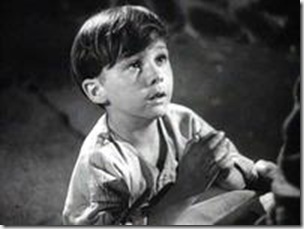
still sons of mathew The Charles Chauvel film Sons of Mathew (still) was released in 1949. It took eighteen months to make at a cost of around £120,000, a very large sum for the time.

The film is an epic of the pioneering families of New England and south eastern Queensland, in part a celebration by Chauvel of his own family.

From my viewpoint, it is an interesting film because it provides a lovely entry point that links together many different features of New England and Australian life. In this context, I have just finished a longish post, Sons of Mathew 2 - Charles Chauvel (1897-1959), looking at the life of Charles Chauvel, one of Australia's premier film makers.

From time to time I will add further posts. However, I don't want to spoil the fun by saying what they might be. Let the story unfold with time.

Wednesday, November 12, 2008

Purely Personal - Clare returns

Clare Sky Diving 2 To the airport yesterday evening to pick up youngest on her return from New Zealand. She had a fantastic time.

This photo shows Clare a bit below 15,000 feet. As a parent I bit my tongue a little on sky diving, a little less so on bunge jumping.

It was, to use an Australianism, bloody freezing coming down. Hence the somewhat blue face.

Clare was the only Australian with her tour group. The rest came from Europe, the US and Canada. Clare, as she always does, enjoyed the company.

All parents worry about their children. We have given our girls lots of love, an education and a structured if somewhat chaotic life style. We have also tried to give them the freedom within some limits to take risks, to make their own mistakes. I think that is about all we could have done.

Both girls have worked since they were about 15. Clare largely paid for the trip herself, if with a little borrowing from her mother. We pay rent and most food costs, but beyond that the girls are now largely financially self-supporting. I regret this a little because I feel that the need to work has limited other things that they might do. Still, it is no small thing at present to have good part time jobs and stable work records.

Twelve years ago I made the decision to be the primary child carer. For a major part of that time I have worked from home. There have been very substantial professional and financial costs in terms of opportunity and income foregone. There have also been great personal gains that I would not have missed.

I think that one of the greatest things my girls have given me beyond their love and friendship is that they have kept me in touch. By this I mean simply that I do know something of their generation.

My paternal grandfather was born in 1867, my maternal grandfather in 1890. Both left school at twelve. While I never knew grandfather Belshaw, the world that my various grandparents and their children knew is still very real to me from direct contact and family stories.

Now I live in Australia of 2008. There is an enormous gap between this world and that of my grandparents.

I have no desire for my children to directly experience what it was like to live in working class Lancashire when pit (grandfather Belshaw) or mill (grandmother Belshaw) were the natural end points for a twelve year old. I do not want them to know what it was like in the case of grandfather Drummond to lose first a mother and then a father and to become a ward of the state at twelve.

I would like them to understand how and why it was that in the first part of the twentieth century all the children of poor Lancashire industrial workers came to acquire tertiary education qualifications. I would also like them to understand how the troubled child who became a ward of the state at twelve should become one of the outstanding Australian education ministers of the twentieth century.

Most of all, and I think that they do understand this, I would like them to understand the concept of contribution.

When I look at the history of my own family and. more broadly, at history in general, I see how the present stands on the shoulders of the past.

Often in writing about history we look at broad sweeps, at cause and effect. Often we generalise. Always we are attracted by the grand, the apparently big decisions or great men. Yet when I come to look at the detail, I find that many of the most important things came about because individual people tried to do things often over extended periods.

This is, I think, the most important thing that I have learned about history, that is all about individuals doing the best and worst of things for a whole variety of reasons. Further, in the broad sweep of history it is the collective impact of individual decisions that counts.

Tuesday, November 11, 2008

Agriculture, the environment and Australia's future

During the week the World Wide Fund for Nature released a report suggesting that it took nearly eight hectares of land to maintain the lifestyle of each Australian, up from nearly seven hectares in 2006.

At the same time in Food Shortages In Australia Thanks To Anti-Farmer Free Trade and Environmental Policies, Steve Truman suggested that Australia might become a net food importer within forty years. We presently feed two people globally for every Australian. There is an error in Steve's maths re the rate of population increase, but it does not affect his argument.

In August, the Australian Bureau of Statistics released data showing that Gross Farm Product (the valued added in agriculture) in NSW in 2006-2007 had fallen to $3.8 billion, just 1.1 per cent of Gross State Product.

We lock increasing areas up in National Parks, then cannot find the money to manage them properly, creating significant problems. We impose wholesale restrictions on land use, restrictions that fail to take varying local conditions into account and that farmers have then to manage around.

Governments are presently buying back water licenses. This is equivalent to putting a bull-dozer through some local communities. Our population concentrates in metro centres and on the coastal strip, leaving country communities that have water and existing infrastructure drained of people.

Regional infrastructure built up over generations has declined to the point that services for many regional communities are worse than they were sixty years ago. This has created a vicious cycle. We have almost painstakingly created islands of poverty that stretch from some outer metro areas through parts of the coastal strip into the inland.

Our policies are developed at a macro level, driven on one side by concepts of efficiency and measurement, on the other by ad-hoc responses to particular crises and perceived need. We live in an issues driven society in which cause based groups have come increasingly to dominate the policy and political debate.

I know that this must sound like something of a diatribe. One of my key frustrations is that, at least as I see it, the information required to make informed judgements is either not there or hard to find. I also get cranky at what I perceive to be an anti-rural bias in current thinking.

Back in October 2006, I wrote:

Australia faces a serious drought, perhaps the worst on record. Whether this drought is simply a bad drought or a sign of global warming is an important issue. But in the conversation I am talking, about discussion went from drought to water to the need to phase out primary production dependent upon water, especially irrigation crops. Part of the argument was couched in terms of the need for the metro cities to have access to more water, part in terms of the need for the environment to have more water, part on the belief that farming and grazing was no longer viable in many parts of Australia.

This led me to re-check the trade statistics, something that I had not done for a while. These suggested that our export dependance on a small number of mining and agricultural products had in fact increased.

For a long time our mainly urban population has been buying more from overseas than we sell. The gap has been met through overseas private borrowing. This is not sustainable in the longer term.

We have to either increase our saving rate or, alternatively, find new things to sell internationally. If we lose our coal and agricultural exports, the position becomes much worse. Should Steve Truman's gloomy prognostication that Australia may become a net food importer prove correct, then we may find ourselves in diabolical trouble, as will those in other countries that we presently feed.

I am actually far more positive than Steve. However, I am worried about our tendency to assume that we can have our cake and eat it too, about our desire for simple solutions.

Take, as one example, the suggestion that we should reduce our population increase by cutting back on migration.

If we cut our migrant intake to zero, and I doubt that this is practical, the growing emigration of younger Australians could well offset the natural increase, leading to a stable or even declining population. However, in this event issues with population aging will bite very quickly.

My personal view in all this is that we need something of a paradigm shift in our thinking, that we need to ask new questions. If we keep on as we are, Australia is likely to find itself caught between a rock and a very hard place within twenty years.

Monday, November 10, 2008

Reflections on the call for bloggers to unite in support of refugees

Tikno drew my attention to the suggestion from Bloggers Unite that brefugeesunite_1loggers from around the world might combine on 10 November to draw attention to the plight of refugees, as well as to the work of Refugees United in helping re-unite separated families.

My problem in thinking about this was simply to find something useful that I might say. Sometimes the problems seem so great, the solutions so distant, that it all becomes just too difficult.

Natural calamities can force people to flee. More often, it is man's inhumanity to man. Refugees are a reflection of the dark side of the human spirit that still dogs us and may ultimately destroy us.

Yet despite all the problems, I think that humanity has actually made progress at two levels.

At the first level, we are simply better at handling natural calamities. This may sound hard to believe, but I think that it's clearly true. If you look back into the past, famines and other natural disasters went un-checked, even un-noticed.

At a second level, we may not be able to remove the dark side of the human spirit, but we have been slowly introducing mechanisms to at least exercise a measure of control over it. The evolution of the international structures created in the chaos that followed the end of the Second World may have been slow and imperfect, but there has been progress.

I make the point about progress because it counters our human tendency to give up in the face of what seem to be continuing insuperable difficulties.

From a purely Australian perspective, I also think it helpful to remember just how important refugees have been to the development of this country. While most Australians don't think of it in these terms, nearly every Australian has a refugee somewhere in their lineage, or at least knows a present or past refugee.

A very large number of Australians of Irish ancestry have one or more ancestors who were forced to leave Ireland by the potato famine when many Irish simply starved to death. Then, at the end of the Second World War as part of the mass migration program, we admitted hundreds of thousands of refugees, displaced persons they were called, from the chaos of Europe.

These are big examples, but over more than two centuries there has in fact been group after group of refugees, decade after decade, each contributing to the evolving texture of Australian life.

In saying this, I am not saying that Australia can simply admit all refugees regardless. We cannot. I am saying that we should remember our own past in forming our views about refugees.

Looking back over this post, I suppose that there are two key messages in it.

The first is the importance of continuing hope that we can and will do better as a species, no matter how hard the problem may appear. The second is the importance of compassion, the need for us as human beings to care for each other.           

Sunday, November 09, 2008

Sunday Essay - New Zealand elections 2008

John Key celebrates win

The photo (New Zealand Herald) shows  National Party leader and new New Zealand PM John Key celebrating his election win.

New New Zealand has been much in my mind recently, in part because youngest has been travelling there.

In my last Sunday Essay,  Sunday Essay - the strange case of Australia and New Zealand, I discussed the relationships between Australia and New Zealand.  

Last night I listened to the live election feed on NZ TV. Yes, I know that this makes me something of an election tragic, but I could not help myself.

Youngest rang. It's been very cold in NZ, with horticulturalists including wine growers battling to save their crops using a variety of techniques including mass helicopters - the downdrafts from the rotors were used to force warmer air towards the ground. Clare said that they had to erect their tents in the snow, a painful process because the tips of your fingers become so sensitive.

This was an election that combined new and old in interesting ways.

New Zealand Electoral System

To begin with, the NZ electoral system has its own unique features. There are 120 seats in the single house New Zealand Parliament broken into three groups:

  • 62 general electorate seats
  • 7   Māori electorate seats
  • 51 general list seats     

The general electorate and Māori seats cover geographic areas with members elected on a first past the post voting system. The 51 general list seats are elected by a proportional representation system under which:

  • Parties that do not gain any electorate seats receive a proportion of the 51 list seats based on their proportion of the vote so long as the vote exceeds 5 per cent or more of the national list or party vote.
  • A party that gains even a single electorate seat does not have to reach the 5 per cent list threshold but instead receives a share of list seats proportional to its vote.

If I understand the system correctly, the dual threshold for list seats means that total seats allocated can exceed 120. In this event, the size of Parliament expands to the degree required to accommodate the overhang.

Each New Zealander has two votes, one electoral plus one party or list vote.

There are some complexities in the whole system that I do not fully understand and have been meaning to find out, but I think that the general description is okay. For example, I assume that the special Māori seats do not count as electoral seats for list purposes, and there are also some rounding issues.

Election Dynamics

This mixed system makes for some fascinating complexities, almost mandating that all New Zealand Governments will be coalition Governments built around the two big parties - National and Labour.

Further, while many Australians assume that New Zealanders are like Australians (at the last census 389,000 Australian residents were in fact born in New Zealand), the two countries are really very different in terms of history, ethnic mix and culture.

Like Australia, New Zealand has been going through a period of rapid change, a process I discussed in a previous post, Pacific Perspective - Pasifika and New Zealand's Future.

New Zealand has been losing people through migration, especially to Australia. At the last Australian census, 389,465 Australian residents were born in New Zealand. The number of Australian residents with one or more parents born in New Zealand is far higher.

The last Australian census also revealed that 93,000 Australian residents classified themselves as Mäori. Given that some  Mäori classified themselves as of New Zealand rather than Mäori ancestry, the actual number of Mäori could be as high as 110,000. After New Zealand, Australia is the world's largest  Mäori country.

New Zealand emigration has been offset by migration, increasingly from Asia and the Pacific Islands.

At the last census, 9.2 per cent of the population was Asian (6.6 per cent at the previous census). Mäori with 14.6 per cent of the population remained the second largest ethnic group, followed by Pacific Islanders at 6.9 per cent, up from 6.5 per cent at the previous census. While England still ranks number one as the birth place for overseas born, the People's Republic of China has now pushed Australia into third place followed by Samoa.

The geographic distribution of these various groups is very different, with migrants especially concentrated in Auckland. 

New Zealand Labour has traditionally drawn its support from industrial areas, from urban voters in the bigger urban centres and from Mäori voters.

The rise of the Mäori Party has eroded Labour's position in the Mäori seats, while the Greens have also eroded Labour's in some areas such as Auckland. While there may be a natural alliance between Labour and Greens in some senses, the presence of first past the post voting in electorate seats means that Labour is the big loser from the Green Presence.

Prior to the election, the opinion polls were showing a clear "it's time" factor after nine years of Labour rule, allowing the Nationals to widen their base.  Further, the polls also suggested that Winston' Peter's New Zealand First Party, a Labour ally, was in a deal of trouble.

Election Results   

The polls were right. The following table drawn from Elections New Zealand shows the preliminary results from election night.

Party


Party
Votes

%
Votes

Electorate
Seats

List
Seats

Total
Seats

National Party

951,145

45.45

41

18

59

Labour Party

706,666

33.77

21

22

43

Green Party

134,622

6.43

0

8

8

ACT New Zealand

77,843

3.72

1

4

5

Mäori Party

46,894

2.24

5

0

5

Jim Anderton's Progressive

19,536

0.93

1

0

1

United Future

18,629

0.89

1

0

1

New Zealand First Party

88,072

4.21

0

0

0

Total Seats

70

52

122

The Nationals always bolt in front at the start of counting because of the strength of their vote in rural areas that finish counting first. Labour did begin to claw the lead back, but it soon became clear that this would not be enough. In the end, Auckland swung heavily to the Nationals, while the Nationals also won Christchurch for the first time since 1996.1370WinstonPeters

As counting proceeded, it quickly became clear that Winston Peters'  New Zealand First Party was in trouble, unlikely to win an electorate seat, unlikely to get to the 5 per cent threshold required for list seats. And so it proved. This result ended the long career of Winston Peters who first entered the New Zealand Parliament in 1978.

Winston Peters has been one of the most colourful New Zealand politicians. Whatever one's views may be of the man, he has never been dull!

New Zealand First's failure to get to 5 per cent was indicative of a broader feature. Of all Roger Douglasthe minor parties, only the Greens passed the 5 per cent barrier.

After the Nationals, the big winner was the ACT Party, a right of centre party originally co-founded by Sir Roger Douglas. I dealt with Sir Roger's role as Finance Minister and in the then Labour Government in Changes in Public Administration - the New Zealand Model .

ACT significantly increased its share of the popular vote while retaining its electorate seat, presently giving it five seats. One side effect was the return to Parliament of the founder of  Rogernomics.

ACT's seats in combination with United Future's one, gives the new National Government a very powerful Parliamentary position.            

Saturday, November 08, 2008

Saturday Morning Musings - joy of new things, 100,000 visitors, blogging

The photo is from Beijing and shows me trying - very badly, I might add - a tai chi exercise. Some of the locals could not help smiling at this somewhat stooped, tall and ungainly visitor.

I like trying nTai Chiew things, finding out about new things. When I arrive in a new place, the first thing I generally do is to buy a local newspaper. My family laughs at me some times because of the way I seem to localise. I can't help it. It's both a matter of personality and of training.

Once I have read the paper, it usually gives me something to talk about or ask questions about. This adds to my knowledge, so I can ask further questions.

I also try to watch the way people behave, interact. Sometimes people do laugh at me because I might look very silly when I try something, but you will be surprised at how often it leads people to open up.

Mind you, there are some things I cannot do. I cannot haggle properly, something that can be a very real weakness. I am too busy listening to the patter, watching the whole thing.Beijing ally

"You come with me to see warehouse" led down this fascinating Beijing back ally. Having done this, it becomes very hard to refuse to buy anything!

To the Chinese, bargaining is a very stylised sport, but one that I would have to consciously learn how to do. It's on my list!

Part of the reason for this introduction, beyond the indulgence of talking about myself, is to make the point that the on-line media can never replace the print version when it comes to getting a context.

It's partly a matter of content - on-line editions just have less content. But its more the paper as a whole including ads and story snippets. These may be small, simple details of local life, but can also be substantial.

It took me less that twenty four hours in Shanghai, for example, to realise that key elements of Australian economic reporting on China were incorrect, that the high prices being charged for our coal and iron-ore were unsustainable. The clue here were newspaper reports on the adverse flow-on effects of downstream price increases on demand for things like cars.

As it happened, the global financial crisis was just breaking, but even without that it was clear that there was a local economic problem.

Turning to other matters, visitor 100,000 to my blogs arrived sometime in the last twenty four hours. I do not know who she or he was, but welcome!

As Tikno pointed out to me in a comment, my first post was back in March 2006. That's a long time ago. It took me a while to get going in terms of regular posts, longer to sort out where my blogging niches might be. Even now my focus continues to shift in light not just of my own writing, but of the conversations between blogs and in comments.

I am actually very lucky in my commentators. Including my own responses, there have been around 164 comments over the last month, mainly on this blog. I also get a range of emails. While this is not large compared to some blogs, it's still a reasonable number.

Importantly, I find the comments very helpful in informing my own writing and thinking.

It's not only the big comments. A short comment by Lexcen led to a total restructuring of my thinking on Australia's so-called culture wars. I had just written a carefully argued post looking at the differences between the US and Australia,a triggered by a post on another blog.

In writing this, I had accepted the premise that the culture wars were in some way linked to the importation of US ideas from the neo-conservatives and the religious right. Lexen's comments made me investigate the derivation of the Australian culture wars. I found that they were just that, Australian culture wars, uniquely local. It meant that I had to put a line through much that I had written.

In our discussions I sometimes get tired and no longer want to play. Poor Arthur copped this one recently in the discussion about the role of religion in Australia. Arthur has strong views that he expressed cogently but in a civilised fashion. It had been an interesting discussion that had teased out a number of issues.

I ended up putting a line under the discussion when I found that instead of discussing with Arthur I wanted to argue with him and that, as a consequence, my own position was becoming more rigid. As I said at the time, this was totally a matter of my own responses. I just thought it better to give myself a break, time to think further about the issues involved.

Looking back to March 2006, I find that my views are no longer the same. Of course there are continuities, but there are also substantial differences. I think that's a good thing.

In some cases I have simply worked through issues and, in the absence of reason to the contrary, no longer feel obliged to discuss them. In others, the issues have largely lost their relevance. In a very small number of cases, indigenous issues are the key example, I have simply withdrawn from discussion on current issues because I feel that I can no longer make a useful contribution.

This is an area where I have written perhaps 100 posts across several blogs with a special focus on history and public policy. The views I have developed are just too left field, too far outside the frameworks that dominate current discussion, to be relevant. I cannot see this changing. So in this case, I decided to limit future posts to a small number of areas where I feel that I can still make a useful contribution.

In all this, new issues and ideas keep emerging to stimulate and interest me.

Just at present, I am having a fair bit of fun dusting off my economics. Economics has always been part of my personal tool kit, but it is in fact some years since I worked as a full time professional economist.

At a personal level, the current global economic crisis has its nerve wracking aspects. I did not foresee global economic turmoil at the time I decided to change work directions! Still, I am really enjoying not just trying to understand developments, but also in trying to explain issues and challenges in a way that non-economists might understand.

Enough for this morning. I have some gardening to do.